The sharp chill of a minus-ten Celsius morning presses against the windowpane, while the furnace forces dry, breathless heat through the vents of your home. You drag a brush through your lengths, and there it is—that hollow, papery snap of split ends catching on bristles. It sounds like walking over dead autumn leaves, a brittle reminder of the seasonal toll taken on your strands.
The instinct is to reach for a heavy, frosted glass bottle of salon serum, something smelling artificially of crushed flowers and false promises. You pump a dime-sized dollop into your palm, smooth it over the frizz, and pretend the temporary silicone slip is actual, restored health. But by noon, the brittle texture always returns, leaving the hair feeling heavier, duller, and somehow worse than before.
Real nourishment is much simpler, quietly waiting right next to your morning coffee beans and baking supplies. The pure, unrefined fat pressed from raw coconut meat does not just coat the damage; it mimics the natural lipids your scalp struggles to pull down to those starving, older ends. By viewing your pantry as an apothecary, you find a raw, immediate fix that transforms straw-like texture into a heavy, glossy ribbon of light.
This is the kitchen secret stylists quietly use on their own days off to salvage their overworked strands. When you bypass the towel and directly rub into wet ends, the open cuticle traps the moisture instantly. You skip the chemical buildup and see shiny hair immediately, before the kettle even finishes boiling for your morning tea.
The Sponge and the Sealant
Most people apply oil to bone-dry hair, expecting the thick liquid to act like a hydrator. But oil is not a drink of water; it is the lid on the cup. Imagine a dried-out kitchen sponge sitting on the counter. If you pour a spoonful of thick fat onto it, the liquid pools lazily on the surface, refusing to absorb, leaving a greasy mess that eventually transfers to your clothes and pillows.
This is the exact reason so many people abandon pantry oils, complaining that their hair feels weighed down yet remains prone to breakage. The mundane inconvenience of soaking wet hair is actually your greatest, most overlooked advantage. Water provides the true hydration, swelling the hair shaft and making the cuticle pliable, while the oil acts as the sealant.
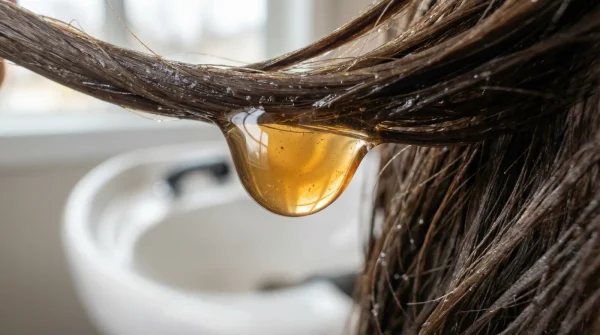
Pure coconut oil is unique because it is exceptionally high in lauric acid, a fatty acid with a tiny, nimble structure. Unlike heavier olive or castor oils that sit strictly on the outside, lauric acid slips partially inside the damp hair shaft. It fills the microscopic potholes left by daily friction and harsh weather, binding to the proteins and preventing the water you just absorbed from evaporating into the dry winter air.
Sarah, a 42-year-old master colourist working out of a sunlit studio in Toronto, watches clients struggle with this constantly. She notices women bringing in expensive, heavy oils, complaining their ends are still snapping off while sitting in her chair. Wiping a smear of lightener from glass, she gently tips her client’s head back toward the sink. She explains that raw, virgin coconut oil only works its magic when the hair is still dripping with tepid water. The water provides the life; the pantry staple simply locks the door behind it.
Tailoring the Treatment to Your Texture
Not all hair drinks from the same cup. The way you apply this raw ingredient must shift depending on the thickness and history of your strands. The goal is to mimic the natural oils your scalp produces, adjusting the ratio of fat to water so the ends feel soft, never suffocated.
- Fátima Bosch discovery drops the price of hair loss treatments
- Fátima Bosch reveals the gene therapy changing skin care
- Why estheticians are abandoning $300 microcurrent treatments for a freezer staple.
- The powder blush mistake instantly aging women over 40.
- The toxic assumption about SPF 50 that leaves Canadians vulnerable to sun damage.
- Women over 50 are ruining their skin barrier with daily retinol use.
- The 60-second waiting rule that prevents under-eye concealer from creasing.
- Stop taking collagen supplements without drinking this specific morning beverage.
- The reason upscale salons are quietly washing hair with apple cider vinegar.
- Dermatologists explain why applying hyaluronic acid to dry skin accelerates aging.
For the Fine-Haired Purist, the fear of looking greasy is a constant battle. Your strategy is extreme minimalism. You need to melt a single raw droplet between your fingertips until it vanishes into a warm sheen. Apply this exclusively to the final three centimetres of your hair while it is soaking wet. Avoid the mid-lengths entirely, treating the oil like a highly targeted spot treatment for the most weathered tips.
For the Thick-Coiled Realist, your hair structure naturally blocks scalp oils from traveling down the spirals. You require a more generous hand. Section your damp hair into four quadrants in the shower. Rake a pea-sized amount of melted coconut oil through each section, pressing the fat firmly into the wet coils. The oil will act as a buffer against humidity, defining the curl pattern while keeping the internal moisture perfectly balanced.
For the Bleach-Torn Pragmatist, chemical processing has physically stripped the lipid barrier from your strands. Your hair absorbs water rapidly but loses it just as fast, leading to that dreaded crunchy feeling. Focus the application heavily on the transition zones where the dye meets your natural colour. The lauric acid will temporarily bridge the damaged cuticles, helping frayed ends snap into place and restoring a fluid, heavy drape to the hair.
The Wet-End Ritual
Treating this process as a mindful routine shifts it from a frantic morning fix to a deliberate act of care. You are not just slapping on a product; you are intentionally manipulating temperature and texture to change the physical state of your hair. The setup requires nothing more than your bare hands and a jar of pure, unrefined coconut oil from the grocery aisle.
The magic relies on working quickly before the air begins to steal the moisture from your shower. Smearing cold, solid oil into the hair will cause clumping and uneven distribution. You must rely on the natural heat of your skin to prepare the ingredient, ensuring the water trapping the deep gloss happens seamlessly and invisibly.
- Leave the shower with your hair dripping wet, avoiding the urge to aggressively rub it with a rough cotton towel.
- Scoop a fraction of a teaspoon of solid coconut oil from the jar.
- Rub your palms together vigorously until the friction turns the white paste into a completely clear, warm liquid.
- Press your oil-coated hands firmly onto the bottom few centimetres of your wet hair, squeezing gently as if you are pressing water out of a delicate sweater.
Tactical Toolkit: Keep the shower water lukewarm, around 38 Celsius, to slightly swell the hair cuticle without scalding the scalp. Use a wide-tooth comb immediately after applying the oil to ensure every single wet strand receives a microscopic coating of the lauric acid barrier.
Once the oil is set, you can gently squeeze the excess water out with an old, soft cotton t-shirt. The fabric will absorb the water but leave the oil securely attached to the hair shaft. As the hair air-dries, you will see shiny hair instantly, free from the stiff, plastic-like coating of traditional commercial serums.
Finding Luxury in the Pantry
There is a profound sense of relief in realizing that the beauty industry does not hold the monopoly on hair health. We are constantly sold the idea that complex problems require complex, synthetic, and expensive solutions. Yet, the human body often responds best to the most fundamental, unadulterated elements found in nature.
You bypass the dizzying marketing machine every time you reach into the kitchen cupboard. Understanding the simple science of water and fat allows you to take control of your routine, replacing consumerist anxiety with the quiet confidence of simple rituals. Your hair feels alive, heavy, and protected, fortified by a kitchen secret that costs pennies and performs like a professional treatment.
The healthiest hair belongs to those who understand that moisture is simply water, and oil is the protective coat you wear over it before stepping into the cold.
| Key Point | Detail | Added Value for the Reader |
|---|---|---|
| Application State | Apply exclusively to dripping wet ends, never dry hair. | Prevents a greasy appearance and locks in actual water hydration. |
| Ingredient Quality | Use raw, unrefined coconut oil from the grocery store baking aisle. | Saves money while providing higher concentrations of beneficial lauric acid. |
| Temperature Control | Melt the solid fat completely via hand friction before touching the hair. | Ensures microscopic, even distribution without heavy clumps or weighted strands. |
Frequent Kitchen-Beauty Questions
Will using kitchen coconut oil make my hair smell like a bakery?
Unrefined oil has a mild, earthy coconut scent that fades completely once the hair dries, leaving no lingering aroma.Can I use fractionated coconut oil instead of the solid paste?
Solid, unrefined oil retains the highest levels of raw lauric acid, which is critical for penetrating the hair shaft rather than just sitting on top.What happens if I accidentally apply too much and my hair looks greasy?
Simply run a warm, damp washcloth over the over-oiled sections; the warmth will lift the excess fat without stripping the hydration.Does this technique work well before heat styling?
Yes, applying a microscopic amount to wet ends acts as a brilliant, natural buffer against the harsh heat of a blow dryer.How often should I incorporate this into my morning routine?
Treat this like a prescription: use it only every second or third wash to maintain the perfect balance between hydration and natural volume.