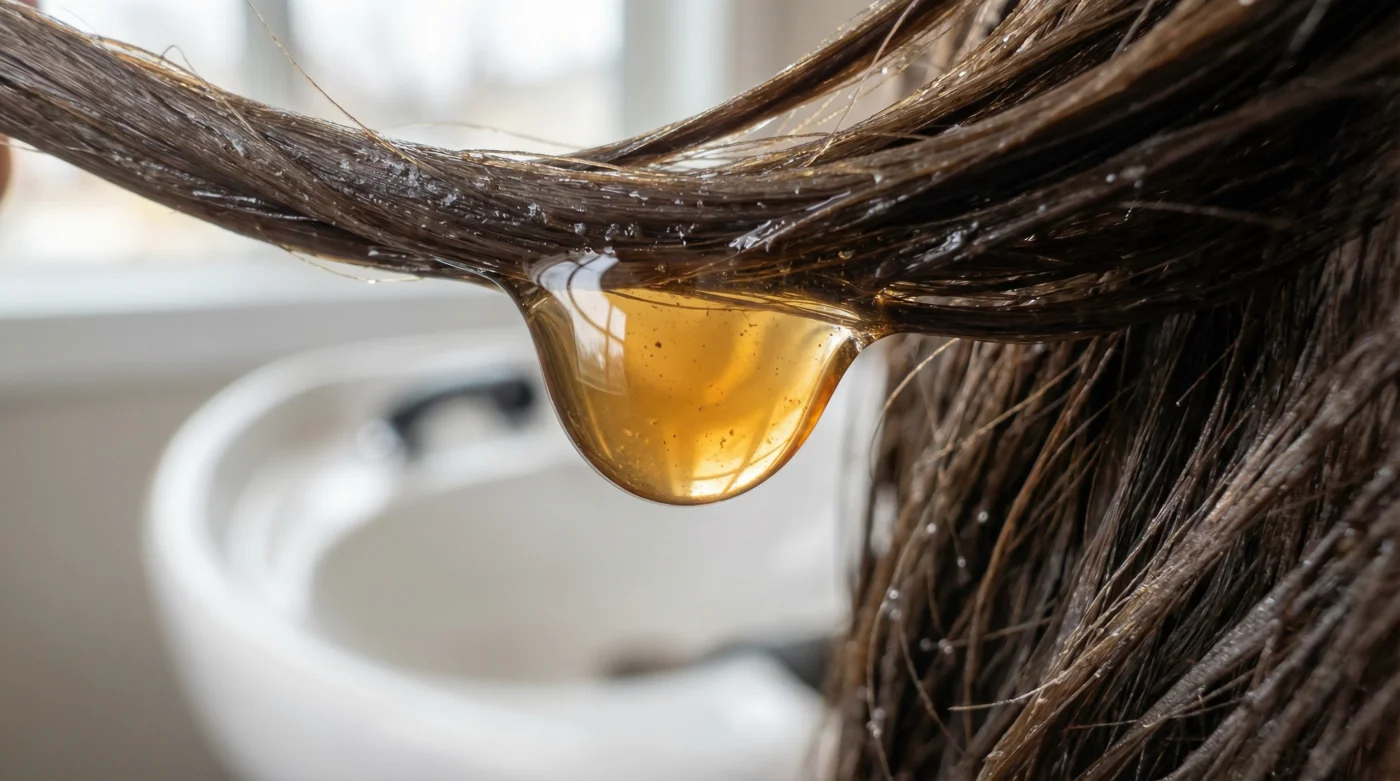
You are lying back in the plush leather basin chair of a discreet, high-end salon. The air smells predictably of sandalwood, crushed rosemary, and quiet wealth. The water is precisely 38 degrees Celsius, warming your scalp as the stylist works a thick lather into your roots. But underneath the expensive botanical fragrances, if you breathe deeply, you catch a sudden, startlingly familiar tang. It smells exactly like the back of your kitchen pantry.
For decades, the beauty industry has sold us the idea that a pristine scalp requires chemical intervention. We buy into the belief that washing away city grit, dry shampoo, and hard water minerals demands aggressive, stripping detergents. We pay for foaming cleansers that leave our strands feeling squeaky, convinced that friction equals clean.
But behind the heavy velvet curtains of upscale studios, the quiet reality is entirely different. Stylists are quietly shelving their high-priced clarifying treatments in favour of something aggressively mundane. They are mixing raw, unpasteurized apple cider vinegar with filtered water, pouring it directly over their clients’ heads to reset the canvas before a cut.
It feels almost like a betrayal of the luxury experience, paying premium rates for an ingredient you likely use to dress a summer salad. Yet this pantry staple dissolves stubborn product buildup, hard water minerals, and trapped oils without ever disturbing the delicate biological balance of your skin. It takes the very thing we thought we needed—harsh, expensive soap—and proves it completely unnecessary.
The Chemistry of the Kitchen Cupboard
Think of a single strand of your hair like a pinecone. When the pH of your scalp is thrown off by alkaline tap water or heavy styling creams, the protective outer scales of that pinecone flare open. The hair catches on itself, feels rough to the touch, and violently reflects light in all the wrong directions, making it look dull and lifeless.
The traditional response is to hit that open cuticle with a heavy clarifying shampoo. It acts like a chemical pressure washer, blasting away the buildup but stripping away all your naturally produced oils in the process. Your hair is left exposed, gasping for the heavy artificial silicones we immediately slather on to smooth it back down.
Apple cider vinegar operates on an entirely different logic. Because it sits at an acidic pH of around 3.0, it does not blast the cuticle. Instead, it acts like a gentle, smoothing hand stroking down the scales of the pinecone, forcing them to lie perfectly flat. The acidity naturally breaks down alkaline mineral buildup from your morning shower, dissolving the dulling film without removing a single drop of your own moisture.
The pungent, sharp smell—the one we instinctively associate with culinary tasks rather than self-care—is actually the marker of its potency. That sharp acidic bite is exactly what resets the natural barrier of your scalp, turning a mundane grocery run into a profound act of biological respect.
Clara, a 44-year-old senior colourist working out of a sunlit studio in Vancouver’s Gastown, knows this better than anyone. Three years ago, she noticed a strange pattern: her most affluent clients, the ones buying the expensive detoxifying shampoos, were sitting in her chair with inflamed scalps and colour that faded within weeks. The stripping agents were simply too violent. She quietly began keeping a frosted glass spray bottle at her wash station, filled with a precise ratio of raw apple cider vinegar and distilled water. ‘I didn’t tell them what it was at first,’ she admits. ‘I just called it a botanical pH-balancing rinse. Once their hair stopped snapping off and their scalp stopped itching, I showed them the grocery store bottle I used to make it. Now, half of them just do it at home.’
Calibrating the Pour
Your approach to this pantry intervention must change based on what your hair endures throughout the week. You cannot treat fragile ends with the same concentration used to strip away four days of dry shampoo. The magic lies in adjusting the strength of the acid to match your lifestyle.
For the Heavy Styler
If your routine involves daily thermal protection sprays, root-lifting powders, and dry shampoo, your scalp is carrying a heavy physical load. Whether you have run five miles in the humid summer air or spent the week commuting through city smog, you need a slightly more concentrated mix. Combine three tablespoons of raw, unfiltered apple cider vinegar with one cup of warm water. Apply this directly to the roots, massaging it into the scalp like you are kneading a sore muscle. Let it sit for three full minutes before rinsing.
For the Colour-Treated Minimalist
When you invest heavily in salon highlights or rich, dark tints, the goal is preservation. Your cuticle is already compromised by the chemical processing, meaning it leaks colour molecules easily. Reduce the ratio to one tablespoon of vinegar per cup of water. Use it only once every two weeks as a final, smoothing rinse to lock the cuticle down and trap the expensive colour inside the strand.
For Curls and Coils
Textured hair relies entirely on its natural lipid barrier to maintain shape and prevent breakage. Clarifying shampoos are often the enemy of a good curl pattern. Instead, use a two-tablespoon ratio, mixed with a splash of pure aloe vera juice. The vinegar will gently remove environmental pollution while the aloe acts as a humectant, pulling moisture straight into the centre of the curl.
The Sink-Side Ritual
Executing this treatment correctly requires a deliberate change in your physical habits in the shower. Shifting your mindset from washing to ‘tuning’ is crucial. You are not scrubbing dirt away; you are rebalancing a fragile micro-environment.
Keep a dedicated applicator bottle in your bathroom. When you are ready, step away from the direct stream of the showerhead. Focus on the temperature first, ensuring the water you use to mix the vinegar is mildly warm, never hot. Hot water encourages the cuticle to swell, which directly fights the smoothing action of the acid.
- The Mix: Measure your specific ratio into the applicator bottle just before stepping into the shower. Do not prepare it days in advance, as the raw enzymes degrade quickly when diluted.
- The Pour: Tip your head back. Starting at the very front of your hairline, slowly squeeze the mixture directly onto the scalp. Let gravity pull the liquid down through the lengths.
- The Massage: Use the pads of your fingers—never your nails—to gently move the skin of your scalp back and forth. You are physically breaking up the crystallized minerals.
- The Hold: Step out of the water stream entirely. Wait two to three minutes. The vinegar smell will be strong; breathe through the sharp scent and let the acid work.
- The Final Rinse: Rinse with water that is 15 degrees Celsius—or as cold as you can comfortably tolerate. This acts as a final shock to snap the hair cuticle entirely shut.
Always source raw, unfiltered apple cider vinegar containing the cloudy sediment at the bottom, commonly known as the ‘mother’. Pasteurized versions completely lack the necessary enzymes. Use a plastic squeeze bottle with a narrow nozzle to bypass the thickest parts of your hair and deliver the liquid directly to the skin where it is needed most.
Reclaiming Your Routine
There is a profound sense of quiet rebellion in realizing that the most effective tool for your physical maintenance does not require a high-end department store visit. It shifts the power dynamic of your daily routine back into your own hands, relying on raw chemistry rather than beautiful packaging.
When you finally understand the mechanics of your own body, you stop falling for the aggressive marketing of problem-and-solution. You no longer feel pressured to buy an expensive antidote to the damage caused by your expensive cleanser. You step off the treadmill and break the cycle entirely.
This simple, acidic pour does more than just dissolve the residue of the week. It forces you to pause, to measure, and to engage with your personal care as a biological reality rather than a commercial transaction. Your hair becomes softer, deeply reflective, and genuinely healthy, untouched by the heavy silicones meant to fake a natural shine. You walk out of the house knowing that true luxury isn’t always found in a gilded salon chair; sometimes, it is quietly waiting right next to the olive oil.
The most sophisticated beauty treatments often rely on the humblest ingredients, respecting the body’s natural chemistry rather than fighting it. — Clara V., Senior Colourist
| Key Point | Detail | Added Value for the Reader |
|---|---|---|
| pH Balancing | Restores the scalp to a naturally acidic 3.0-4.0 range. | Flattens the cuticle for intense, natural shine without silicone. |
| Mineral Dissolving | Breaks down calcium and magnesium from hard tap water. | Prevents blonde hair from turning brassy or dull over time. |
| Oil Preservation | Cleanses without utilizing harsh sulfate detergents. | Eliminates dry, itchy scalps and reduces the need for heavy conditioners. |
Frequently Asked Questions
Will my hair smell like vinegar all day?
No. Once the hair is fully dry, the sharp acidic scent dissipates entirely, leaving only the smell of your regular conditioner or natural hair.
Can I use standard white vinegar instead?
You should avoid it. White vinegar is highly refined, much more acidic, and lacks the raw, soothing enzymes found in unfiltered apple cider vinegar.
How often should I do this rinse?
For most hair types, once every one to two weeks is the perfect frequency to maintain balance without over-acidifying the scalp.
Should I shampoo before or after the rinse?
Apply the vinegar rinse after a gentle shampoo, but before you condition. It replaces your need for a harsh, clarifying first wash.
Will this strip my expensive salon colour?
Quite the opposite. When heavily diluted, the acidity actually locks the hair cuticle tightly shut, trapping your colour molecules inside and preventing premature fading.