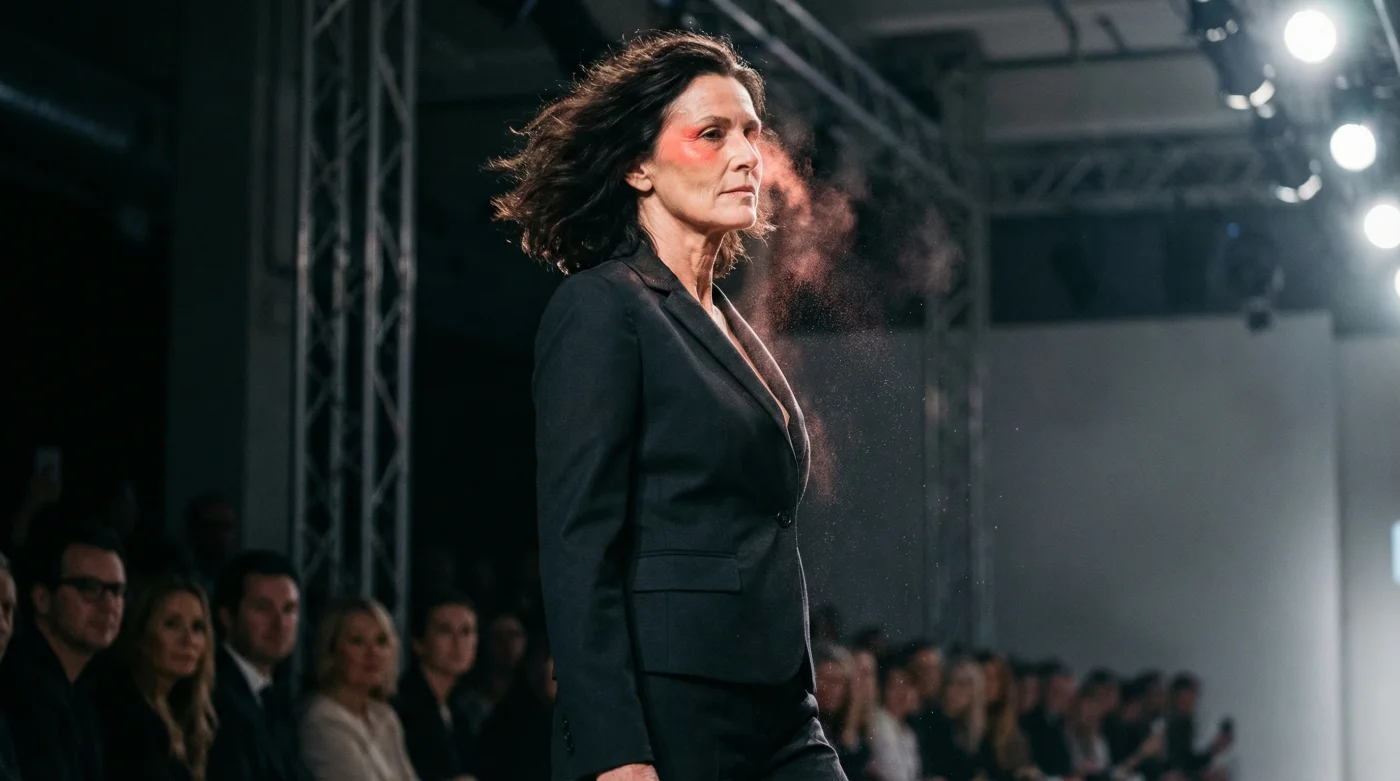
You stand in the soft, diffused light of a Tuesday morning, holding a familiar little compact. The quiet snap of the clasp opening, the faint, floral scent of pressed powder rising into the air—it is a ritual so deeply ingrained your hands could perform it in the dark. You smile at your reflection, locate the roundest, fleshiest part of your cheek, and dust a perfect circle of colour right on the centre. It is exactly what you were taught to do in your twenties.
But when you step outside into the unforgiving midday sun and catch your reflection in a storefront window, something feels distinctly off. The colour pulls your face downward, creating shadows in places that should catch the light. The youthful flush you intended has somehow morphed into a visual weight, dragging your features toward the pavement and doing you no favours.
The apple of the cheek rule worked beautifully when your face was padded with the abundant collagen of early adulthood. That fleshy centre was the highest, tightest point of your smile, making it the logical canvas for a rosy flush. But as the years turn, the landscape of your face changes naturally, and that same application technique silently begins to work against your underlying bone structure.
We are universally instructed to grin widely while applying makeup, mapping our features based on an artificial, temporary tension. Yet, the moment you relax your mouth, the painted apple drops, pulling the optical focus of your face down with it and adding years to your appearance in a single brushstroke.
The Architecture of Light and Shadow
Think of your facial structure not as a flat canvas, but as an architectural framework draped in delicate fabric. When you place a dark or colourful pigment squarely in the soft, hollowed centre of the cheek, you are highlighting the very area that naturally begins to lose volume as we age. You are drawing the eye to the softening, rather than the strength.
Shifting your focus away from the fleshy centre requires a complete physical re-education of your hands. Placing colour higher up, directly onto the solid ridge of the cheekbone, creates a visual anchor that rests on the firmest part of your face.
This upward shift acts as an optical cantilever. By keeping the pigment high and sweeping it subtly toward the temples, you draw the observer’s eye up and out. It is a structural lift that defies gravity, requiring no invasive procedures—just a simple, deliberate repositioning of where the brush first touches the skin.
The powder blush itself is not the enemy; the geographical coordinates are simply outdated. Finding the hard bone beneath the skin allows the powder to rest where the light naturally hits, mimicking a true, healthy circulation rather than a painted doll.
A Shared Secret from the Studio
Clara, a fifty-two-year-old editorial makeup artist working out of a drafty, natural-light studio in Montreal, spent years watching women scrub their faces raw trying to fix tired-looking makeup. They would pile on more concealer, more highlighter, desperate to lift a face that was being visually weighed down by their own blush placement.
One brisk November afternoon, while preparing a client for a portrait session, Clara asked the woman to stop smiling. She banned the mirror grin entirely, realizing that mapping the face while it was actively contorted guaranteed a misplaced application once the client relaxed into a natural state.
Clara instructed her clients to keep a completely resting, neutral expression. She would then press her thumb against the side of their face, physically locating the zygomatic arch—the cheekbone—before allowing the brush to touch the skin. The transformation was immediate: faces that looked heavy and shadowed suddenly appeared sculpted, awake, and distinctly lifted.
That small, physical act of touching the face to find the bone changed everything in her practice. Reading your own resting geometry became the new standard, replacing the generic, one-size-fits-all advice with a tailored, anatomical approach that respected the current shape of the face.
Customizing the Lift for Your Face Shape
Your cheekbones are as unique as your fingerprints, and finding the perfect placement means making subtle adjustments to the master technique. If you have an oval face, the goal is to widen the features slightly, keeping the sweep of colour strictly horizontal along the upper ridge, blending backward until it fades softly into the hairline.
For a rounder face, the geometry requires a steeper angle. Blend upward and outward, almost mimicking a soft contour, to create the illusion of hollows beneath the bone while keeping the brightest pop of colour high near the outer corner of the eye.
Those with heart-shaped faces often find that blush can quickly overwhelm their sharper, narrower lower half. The trick here is to soften the starting point, beginning the application two full fingers’ width away from the nose, preventing the colour from creeping inward and closing off the centre of the face.
Even your choice of eyewear plays a role in this physical mapping. Frames create visual boundaries, meaning you must ensure the blush sits just below the lower rim of your glasses, interacting harmoniously with the accessory rather than fighting it for space on your cheeks.
The Mindful Application Technique
Executing this gravity-defying shift requires a minimalist touch. The bristles should breathe across the skin like a sigh, never scrubbing or grinding the powder into the pores. You want to deposit a sheer veil of colour that catches the light like morning frost, not a heavy, opaque stamp.
The tools you select will dictate the softness of your edges and the success of the lift. Avoid dense, packed brushes, opting instead for something wispy and angled that diffuses the powder before you even begin to blend.
Here is your tactical breakdown for a lifted, architectural glow:
- Rest your face completely. Do not smile into the mirror.
- Tap the brush into the powder, then tap the handle firmly against your wrist to discard the heaviest dust.
- Locate the hard bone of your cheek with your fingers. Place the first touch of the bristles there, keeping two fingers’ distance from your nose.
- Sweep the brush in a soft, upward crescent motion toward the top of your ear.
- Take a clean, fluffy brush with no product on it and sweep over the edges until the powder melts seamlessly into the skin.
Your tactical toolkit should be simple: a matte or satin powder blush—avoiding heavy, frosty shimmers that settle into fine lines—and an angled, loosely bound brush. Less product applied intentionally will always outshine a heavy application placed carelessly in the wrong zone.
Beyond the Compact
Changing a habit you have practiced every morning for twenty years will feel undeniably strange at first. Your hand will instinctively want to drop toward the centre of your face, seeking the familiar comfort of the fleshy apple. Resist the urge, and trust the architecture of your bones.
Mastering this small detail is not about chasing the face you had in your youth or hiding your age. It is an act of presence, acknowledging the beauty, strength, and reality of the geometry you possess right now in this exact season of life.
When you step back and look at the lifted, rested version of yourself in the mirror, you are seeing a face that is no longer fighting gravity. You are working with your structure, letting the light fall exactly where it belongs.
Stop painting the smile you wore yesterday, and start mapping the bone structure you own today.
| Key Point | Detail | Added Value for the Reader |
|---|---|---|
| The Old Method | Smiling to find the ‘apple’ of the cheek. | Highlights exactly why your face looks dragged down when your expression rests. |
| The New Placement | Applying directly onto the resting upper cheekbone. | Creates a non-surgical visual lift that defies gravity and shadows. |
| The Tool Shift | Switching from dense round brushes to wispy, angled ones. | Prevents heavy, aging powder buildup and guarantees a sheer, skin-like finish. |
Frequently Asked Questions
Does this mean I have to throw away my favourite powder blushes?
Not at all. The formula is rarely the problem; it is entirely about placement. Your current powder will work perfectly once repositioned.Should I still use a highlighter if my blush is placed higher?
Yes, but use a very light hand. Place highlighter just a fraction of an inch above the blush, ensuring they melt together rather than sitting as two distinct stripes.What if my cheekbones are hard to find?
Use your thumb to press gently along the side of your face near your ear. You will feel a hard, bony ridge—that is your zygomatic arch and your new starting line.Is cream blush better for mature skin than powder?
Creams offer a dewy finish, but a finely milled satin powder applied with a light hand over well-hydrated skin will last longer and avoid sliding into fine lines throughout the day.How close to my nose should the colour stop?
Always keep a strict two-finger distance from the side of your nose to prevent the colour from closing in on the centre of your face and creating redness where you do not want it.