Morning light always tells the truth. When you stand close to the bathroom mirror, coffee cooling on the counter, the hollows under your eyes seem to hold the weight of the last decade. The instinct is to cover, to conceal, to layer on the thickest, most opaque pigment you own until the darkness vanishes under a matte shield. We have all been taught that heavy coverage is the only reliable shield against looking tired.
For years, internet tutorials taught you to paint large triangles of bright liquid concealer down to your cheekbones. You were told to press dry powder over the wet product, packing it in so it wouldn’t move or melt away by midday. But skin is not canvas; it is a breathing, shifting organ that thins and changes as we gather years. The rules that apply to a twenty-something’s firm, plump cheeks simply fail when brought to the delicate terrain of mature skin.
When you apply thick makeup to the under-eye area in your forties and beyond, the result is often a stark, papery texture that ages you faster than the shadows ever could. The professional approach is entirely different, relying on the quiet physics of light and colour rather than brute force. It creates an illusion of a full night’s rest without relying on the heavy, cracking armor of traditional baking methods.
The Illusion of Weightless Light
Think of your under-eye skin like fragile tissue paper resting over a blue-violet stained glass window. If you try to block out the dark glass by piling on thick, beige paint, the paper becomes stiff, heavy, and visibly cracked with every smile. This is exactly what happens when you attempt to erase dark circles with dense matte coverage and a heavy dusting of setting powder. You are treating a colour problem with a texture solution.
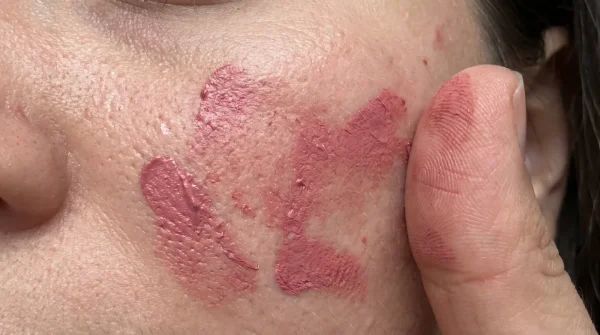
You end up with a mask of settling creases, drawing more attention to the very fine lines you hoped to blur. The secret lies in neutralizing, not burying. By applying a whisper-thin layer of a peach-toned colour corrector, you cancel out the blue and purple shadows using the fundamental rules of colour theory. The warmth of the peach physically absorbs the cool tones of the bruising beneath the skin.
Once the darkness is neutralized, you no longer need an opaque blanket of coverage. You only need a sheer, hydrating serum liquid concealer to blend the area softly into the rest of your face. It defies the old instinct to bake and pack, favouring a fluid, skin-like finish that moves seamlessly with your daily expressions.
Clara, a 48-year-old editorial makeup artist who spends her winters prepping faces in drafty Toronto studios, often watches her clients cringe when she puts away the heavy coverage pots. Last November, she worked with a television anchor exhausted from a brutal news cycle. Instead of reaching for a high-coverage wand, Clara tapped a nearly microscopic dot of warm peach cream over the deepest purple vein near the tear duct, followed by a hydrating serum formula. When the anchor looked in the mirror, she didn’t see makeup; she just saw herself after twelve hours of uninterrupted sleep. Clara calls this technique breathing through the living skin.
Adjusting the Wash of Colour
The peach-toned corrector is not a universal paint. The hue must be calibrated carefully to the specific depth of your shadows and the natural tones of your skin. Wearing the wrong corrector can leave you with an unnatural orange ring that is harder to hide than the original shadow.
- Women over 50 are ruining their skin barrier with this common hydration mistake
- The professional application trick that prevents midday makeup melting
- The pantry staple that completely strips product buildup from thinning hair
- The scientifically correct layering rule that stops redness overnight
- Why your expensive morning serum is actually causing hyperpigmentation
- The under-eye technique makeup artists use on women over 40 to erase dark circles
- Women over 50 are ruining their skin barrier with this common hydration mistake
- The professional application trick that prevents midday makeup melting
- The under-eye technique makeup artists use on women over 40 to erase dark circles
- Women over 50 are ruining their skin barrier with this common hydration mistake
For the Porcelain Complexion, if you burn quickly in the Canadian summer sun, your under-eye shadows likely lean icy blue or red. Seek a pale salmon pink rather than a true, vibrant peach. This delicate shade neutralizes the blue undertones gracefully without depositing too much pigment on your fair canvas.
For Olive and Medium Tones, the shadows often pull a bruised purple or a dull brown. A true apricot or medium peach corrector acts as an instant eraser here. The warmth of the apricot directly counters the bruised look of purple shadows, melting into olive skin with barely any physical effort or blending.
For the Deep Rich Canvas, shadows tend to appear grey or somewhat ashy. Bring warmth and life back by utilizing a rich orange or brick-red corrector. Applied sparingly, it stops the subsequent liquid concealer from turning a ghostly grey over the dark areas, providing a vibrant, rested base for the rest of your makeup.
The Minimalist Concealing Ritual
Erasing shadows is a quiet, deliberate process. Rushing leads to heavy hands, excess product, and the inevitable settling into fine lines that we are trying to avoid. Take your time and respect the fragile nature of the skin.
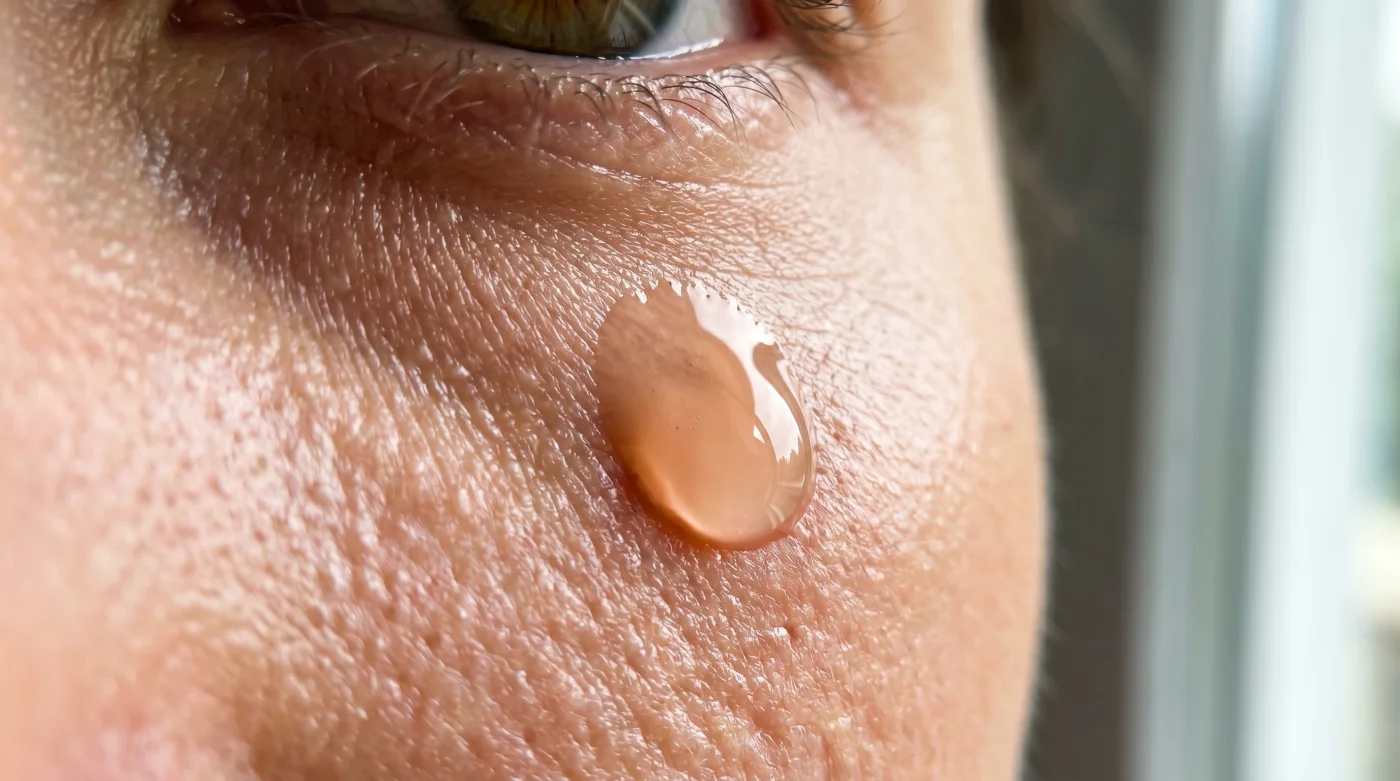
Start by ensuring the area is plump with weightless liquid hydration. Use a gel-based eye cream that absorbs fully into the skin rather than a rich, oily butter that will cause your makeup to slide around and separate throughout the afternoon.
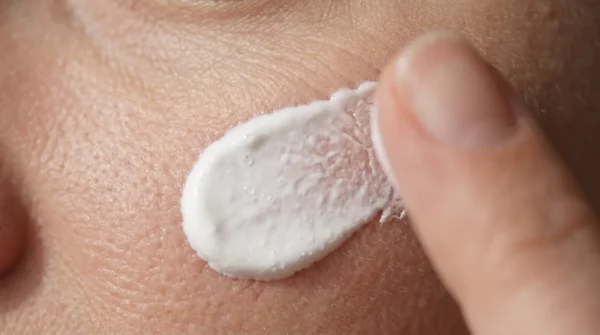
- Warm the tiniest speck of your chosen peach corrector on the back of your hand. Your body heat softens the waxes, making it melt into the skin upon contact.
- Using your ring finger, gently press the corrector only over the darkest shadows. Never sweep it across the entire under-eye area.
- Let the corrector set for sixty seconds. This brief pause allows the pigment to grip the skin so it will not mix with your next layer.
- Apply three small dots of a sheer, serum-based liquid concealer: one near the inner corner, one in the centre, and one sweeping slightly up toward the temple.
- Tap rapidly with a damp, porous sponge to blend the edges outward, letting the serum formula fuse with your natural texture.
Tactical Toolkit:
- Temperature: Room temperature products, warmed by your own body heat (roughly 37 Celsius on the back of your hand).
- Time: A strict 60 seconds of resting time between the corrector and the concealer application.
- Tools: Your ring finger (which naturally exerts the least pressure) and a tightly wrung-out damp makeup sponge.
Reclaiming Your Reflection
Letting go of the instinct to paint and bake your skin requires a certain kind of vulnerability. For years, the thick layers offered a sense of armour, a way to hide the fatigue of balancing work, family, and the sheer velocity of daily life. Shedding that armour can feel incredibly exposing at first.
But true confidence comes from working with your skin’s reality, not fighting a losing battle against it. When you stop weighing down the fragile under-eye area with heavy powders, you allow your face to move freely, to crease naturally when you laugh, and to look vibrantly alive.
You are no longer trying to look twenty-five by freezing your features under a layer of matte pigment. You are simply revealing the most rested, vibrant version of who you are today. The shadows are softened, the delicate texture is respected, and the face staring back from the morning mirror is undeniably, beautifully yours.
“Aging is a privilege that demands a softer brush; the goal is to filter the light, never to pave over the skin.”
| Key Point | Detail | Added Value for the Reader |
|---|---|---|
| Colour Correction | Using peach, salmon, or orange hues before concealer. | Neutralizes dark circles completely with a fraction of the product, preventing cakey buildup. |
| Serum Formulations | Swapping thick matte wands for water-light, hydrating liquids. | Maintains skin elasticity and refuses to settle into fine lines throughout the day. |
| The 60-Second Pause | Waiting a full minute between corrector and liquid concealer. | Stops the colours from mixing together, keeping the brightening effect pure and intact. |
Frequently Asked Beauty Questions
Do I still need to use setting powder?
Skip the heavy bake entirely. If you have oily skin or wear glasses, press a microscopic dust of translucent powder only in the inner corner or exactly where the frames rest on your nose.Can I use a peach lipstick if I do not own a corrector?
Cream lipsticks contain different waxes that can drag on the delicate eye area and cause small bumps called milia. It is much safer to use a dedicated corrector designed specifically for facial skin.Why does my liquid concealer still crease after two hours?
You may be applying it too close to the lower lash line where the facial muscle movement is highest. Keep the product focused on the orbital bone and blend the sheer edges upward.Is applying with a brush better than a damp sponge?
A fluffy synthetic brush provides an airbrushed, light application, while a damp sponge presses the product deeper into the skin for a natural finish. Both methods work vastly better than swiping directly from a wand.Does this method work for severe, hereditary dark circles?
Yes. The physics of colour theory apply regardless of the original cause of the darkness. You simply need to ensure your corrector matches the precise depth and undertone of your hereditary pigmentation.