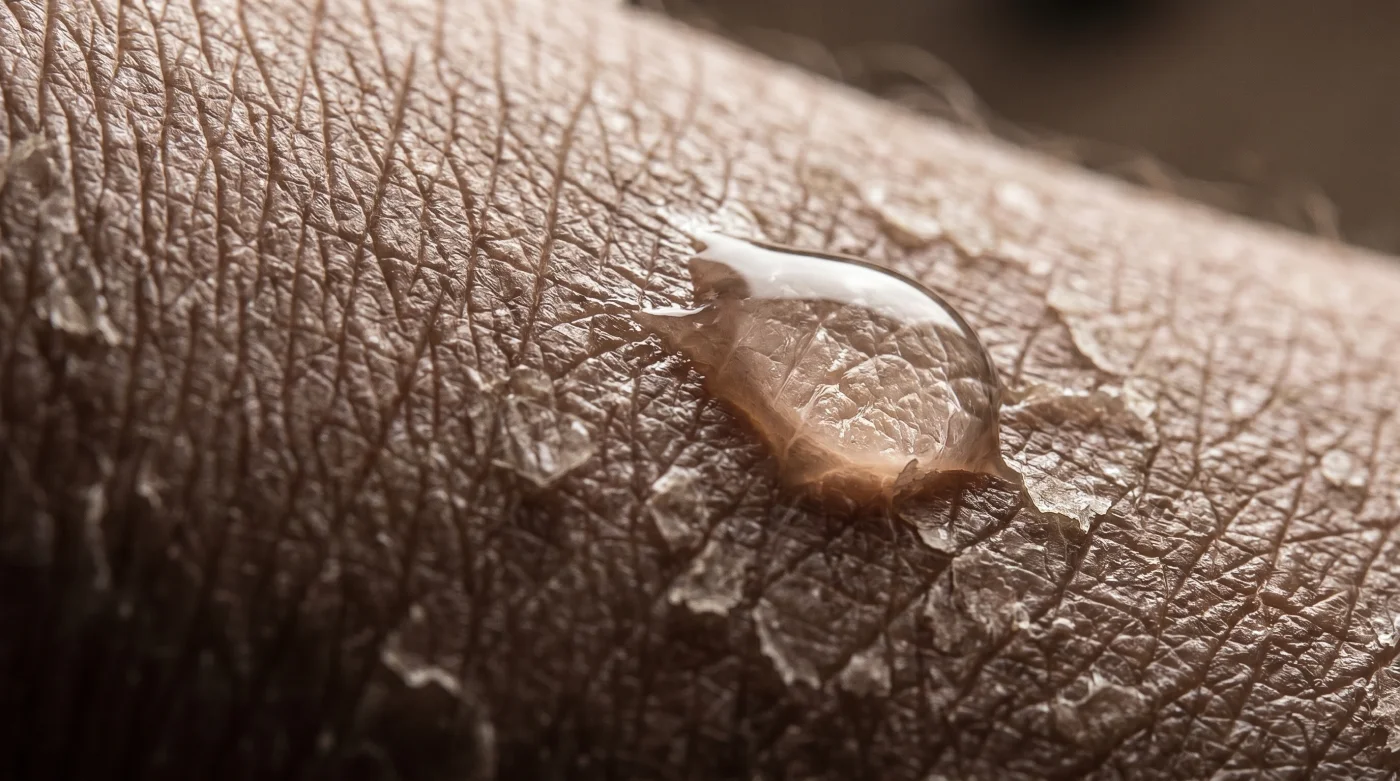
The steam from the shower has finally cleared, leaving a thin film of condensation on the mirror. You reach for that frosted glass dropper bottle, the one promising a dewy, plump complexion. Outside, the air sits at a brittle minus five Celsius, practically pulling the moisture right out of the room. You dry your face thoroughly with a thick cotton towel, wait a few seconds until the skin feels bare, and press the thick, clear gel into your cheeks, expecting a rush of relief.
But by mid-morning, something feels terribly wrong. Instead of a soft, resting glow, your face feels tight, almost like paper left too close to a radiator. You might blame the furnace or the biting wind sweeping down your street, but the culprit is actually sitting quietly on your bathroom counter. You are unknowingly stripping your own reserves.
This is the silent trap of modern routine layering, especially as cellular turnover and lipid production change past our forties and fifties. We have been taught a sequence that actively works against us, treating an active humectant like it is just another simple lotion meant to be rubbed into a dry canvas.
When you strip away the marketing, this molecule is just a sponge. If you give it a dry environment, it does not magically create water from nothing. It steals from the depths, pulling hydration from the lowest layers of your skin straight out into the dry winter air.
The Anatomy of a Thirsty Sponge
Think of a completely dry, hardened kitchen sponge sitting on your counter. If you pour a thimble of thick syrup onto it, the syrup just sits there, sticky, heavy, and useless. It cannot penetrate. But if that sponge is already damp, barely wrung out, it will drink up whatever you offer it with zero resistance.
This is exactly how your acid mantle functions. By applying a heavy humectant to bone-dry skin, you are forcing that molecule to look for water wherever it can find it. If the air in your bathroom is dry, it pulls from your dermis, leaving your foundational layers completely parched while the surface feels tacky.
It is a profound shift in thinking. The dryness you feel by two o’clock in the afternoon isn’t a sign you need to buy a more expensive product; it is a sign your application sequence is backward. The water must always come first.
Elise, a 54-year-old botanical formulator based out of a small studio in Victoria, British Columbia, spent years watching clients complain about this exact midday tightness. She realized that women over fifty were applying potent serums immediately after violently toweling off their faces, treating hydration like an oil that needed a dry base. Elise shifted her entire protocol, banning dry towels from her treatment room entirely. She calls it the damp bridge—a method of trapping ambient moisture before the acid even touches the skin, halting the trans-epidermal loss instantly.
- Major scandal reveals hidden PFAS chemicals in Canada’s top lash products
- Health Canada confirms severe new restrictions on this everyday makeup ingredient
- Why luxury skincare brands are quietly removing this filter from their formulas
- The professional application trick that prevents midday makeup melting
- The pantry staple that completely strips product buildup from thinning hair
- The zero-dollar facial technique that mimics professional jawline fillers
- The scientifically correct layering rule that stops redness overnight
- Why your expensive morning serum is actually causing hyperpigmentation
- The under-eye technique makeup artists use on women over 40 to erase dark circles
- Major luxury brands are scrambling to remove talc powder after new safety findings
Tailoring the Damp Bridge to Your Climate
How much water you need on your face before applying your serum depends heavily on where you are standing. A morning in Calgary demands a different strategy than a rainy afternoon in Halifax.
For the Prairie Winter: When the indoor heating is blasting and the outdoor air is a dry, biting cold, a simple splash of tap water isn’t enough. You need a thicker base layer, like an aloe-infused mist, left visibly glistening on the cheeks and forehead before you apply the acid.
For the Coastal Resident: In highly humid environments, you can rely more on the air itself. Leaving the bathroom door closed to trap the shower steam creates a micro-climate. You only need the skin to feel slightly tacky, like the surface of a ripe peach, rather than dripping wet.
For the Reactive Barrier: If menopause has left you with sudden patches of redness or sensitivity, skip the tap water altogether. Hard municipal water can exacerbate the sting. Instead, use a chilled thermal water spray, soothing the heat first before laying down your humectants.
The Reverse Hydration Technique
Fixing this aging error requires stepping back and slowing down. You are no longer painting a wall; you are tending to a delicate ecosystem that responds to touch, temperature, and timing.
Stop reaching for the towel the moment the water shuts off. Let the drops linger, allowing your body heat to slightly warm the moisture resting on your collarbones, jaw, and chin.
Here is how you restructure those vital three minutes at the sink:
- Cleanse with a milk or balm, avoiding anything that foams aggressively and strips your natural oils.
- Pat the face just once with a clean cotton cloth, leaving a distinct, visible layer of moisture behind.
- Dispense three drops of the serum into the palm of your hand, not directly onto your face.
- Press the palms together to warm the gel, spreading it evenly across your hands.
- Stamp the product firmly into the damp skin, moving from the neck upward, pressing the water into the pores.
Once the gel is applied, you have a sixty-second window. You must immediately seal that hydration in with an occlusive cream or a facial oil, locking the gate shut before the dry air steals it back.
Consider your tactical toolkit: the water temperature should be lukewarm, never hot, as hot water melts your natural lipid barrier. The wait time between the water layer and the serum layer must be zero seconds. And the sealant should be a ceramide-rich cream applied while the serum is still tacky to the touch.
Reclaiming Your Morning Peace
Rethinking this small, seemingly insignificant step changes the entire rhythm of your morning. You stop fighting your own biology and start working in tandem with the natural physics of hydration.
When your face doesn’t hurt by noon, a quiet kind of relief settles over you. You aren’t distracted by the tight, pulling sensation around your eyes or the sudden flakiness near your jawline. The physical comfort restores focus, letting you move through your day with an easy, unbothered grace.
True skincare is never about forcing a chemical reaction. It is about setting the right stage, providing the water, and letting your body do the heavy lifting. By respecting the sponge, you protect the barrier.
Humectants are completely loyal to water; if you do not supply it on the surface, they will gladly take it from your own internal reserves.
| Key Point | Detail | Added Value for the Reader |
|---|---|---|
| The Dry Application | Applying acid to towelled-off, bare skin. | Identifies the root cause of severe dehydration and mid-day tightness. |
| The Damp Bridge | Applying the product to visibly moist skin. | Traps water against the barrier, creating a plump, soft texture instantly. |
| The Occlusive Seal | Layering a thick cream over the tacky serum. | Prevents trans-epidermal water loss, crucial for dry Canadian winters. |
Frequently Asked Questions
Does this mean I should not dry my face at all?
Leave your face about seventy percent wet. Do not wipe it bone-dry; a single light pat with a towel is enough.Can I use a toner instead of tap water?
Yes, a hydrating mist or a gentle toner without alcohol works beautifully to create the damp layer.Why does my skin feel sticky after applying?
Stickiness usually means you used too much product or did not provide enough water underneath it for the acid to absorb.Do I wait for it to dry before putting on moisturizer?
No. Apply your moisturizing cream while the acid is still tacky to properly seal in the hydration.Is this technique only for mature skin?
While mature barriers lose moisture faster, this method prevents dehydration and protects the acid mantle at any age.