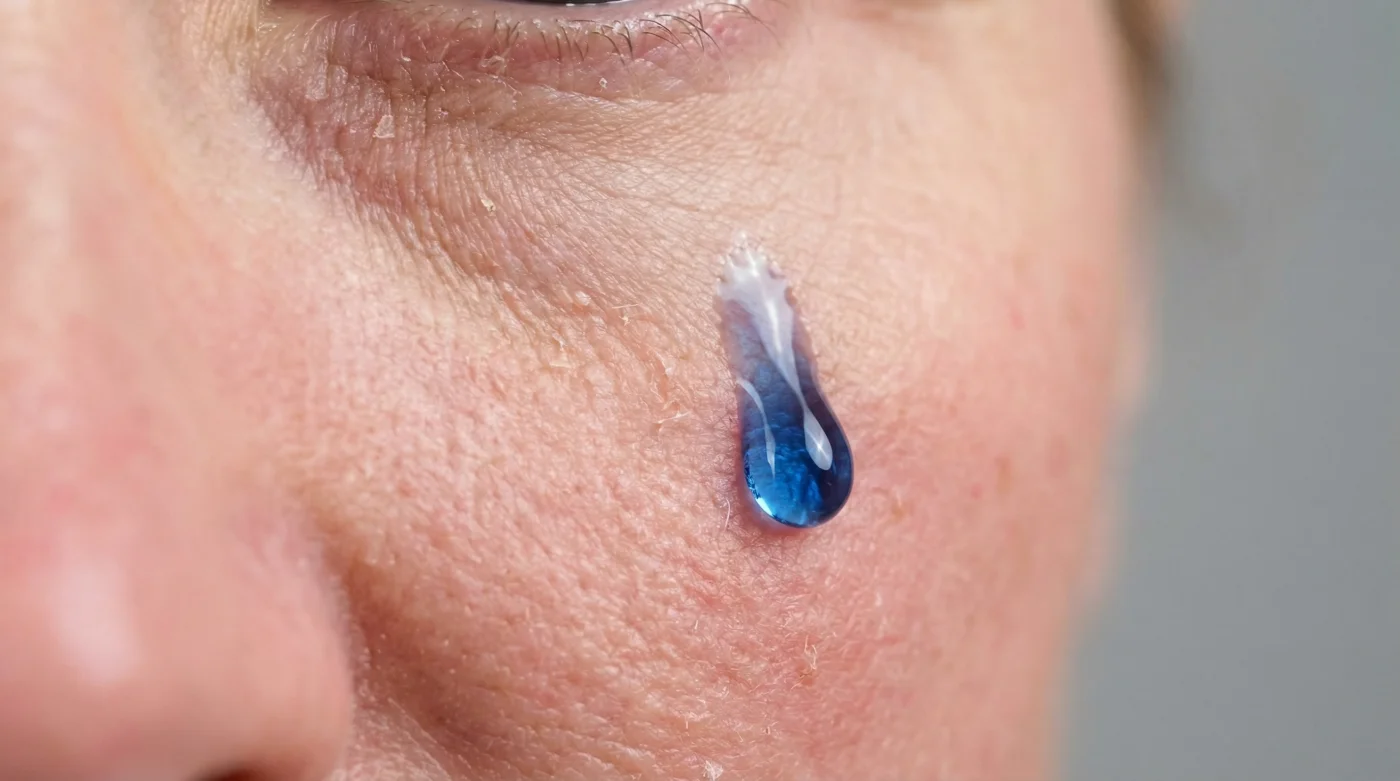
The bathroom tile is cold against your bare feet, and outside the frost is clinging to the windowpane at minus five Celsius. You splash lukewarm water across your face, expecting the soft, supple texture promised by the expensive amber bottle sitting on your counter. Instead, your cheeks feel tight, pulling uncomfortably at the corners of your mouth. A faint, persistent flush sits across your cheekbones, mimicking a permanent windburn rather than the promised youthful glow.
For years, you have likely believed that this stinging signifies working ingredients. You apply another layer of serum, hoping to force the fine lines into submission, ignoring the way your skin tightens defensively. The beauty counters taught us to push through the peeling phase, promising that a fresh, flawless complexion was waiting just beneath the irritation.
The reality contradicts everything the glossy magazine spreads have drilled into your morning routine. The aggressive, daily assault on your face is quietly dismantling the very structure that keeps your complexion looking healthy. As we pass fifty, estrogen levels drop, causing a natural decline in sebum production and a thinning of the epidermis.
By applying strong actives every single night, you are melting your protective lipid mortar. Think of your skin cells as bricks, and the delicate lipids between them as the mortar. Hitting that structure daily with a harsh chemical exfoliant leaves the entire foundation vulnerable to microscopic tears, moisture loss, and chronic inflammation that actually accelerates the visible signs of aging.
The Silk Blouse Principle
We have been conditioned to treat our faces like rusty cast-iron pans that need to be scrubbed and resurfaced. But your complexion in your fifties is not cast iron; it is a delicate vintage silk. You would never bleach a silk blouse every night and expect the fabric to remain strong and luminous.
The redness and the flaking you experience are not signs of weakness. By treating your face like silk, you realize this sensitivity is actually a built-in alarm system. Your body is begging you to preserve the lipids that give a youthful plumpness.
This perceived flaw—the inability to tolerate a daily anti-aging regimen—is your greatest advantage. It forces you to stop stripping away the barrier and start fortifying it. When you listen to that alarm, you stop the cycle of chronic inflammation that breaks down collagen.
Dr. Miriam Vance, a fifty-eight-year-old clinical researcher in Montreal, noticed this exact pattern in her practice. Women were arriving with raw, translucent cheeks, completely chasing a chemical burn illusion. She realized her peers were trying to force a twenty-year-old cellular turnover rate onto fifty-year-old biology, resulting in permanent damage. Her solution was not to abandon the active ingredients, but to radically change the rhythm of application.
Deep Segmentation: The Adjustment Layers
Transitioning away from daily use requires a tailored approach. For the Sensitive Minimalist, the goal is to introduce the active ingredient without ever triggering the alarm system. You want the firming benefits without the redness.
The secret here is to buffer the active compound gently. By applying a thick, ceramide-rich moisturizer first, you create a physical shield. The active ingredient must work its way through this protective layer, slowing down absorption and preventing the sudden shock to your epidermis.
For the Recovering Active Addict, the approach requires a full reset. If your face currently feels like tight paper, you cannot simply reduce your usage; you must stop completely for fourteen days. Your barrier needs silence.
During this quiet period, you will rebuild the fragile surface tension using only humectants and emollients. Think of glycerin and squalane as the soothing paste that fills in the microscopic cracks you have inadvertently created.
The Mindful Application Protocol
Skin cycle micro-dosing replaces the daily grind with a deliberate, four-day rhythm. It allows you to reap the rewards of cellular turnover without the severe chemical burn.
When you mix your night treatment, the cream should tremble slightly on your fingertips, heavy with hydration. You are no longer painting on a sheer, stinging liquid. You are applying a rich, supportive matrix.
- Night One: The Micro-Dose. Apply a pea-sized amount of your active serum mixed into a heavy ceramide cream.
- Night Two: The Hydration Flood. Use only water-based serums, like hyaluronic acid or glycerin, applied to a damp face.
- Night Three and Four: The Lipid Seal. Apply a heavy, occlusive balm to lock down moisture and allow the cells to rest.
Your tactical toolkit for this method is simple. Keep your water temperature tepid—never hot enough to flush the skin. Wait a full two minutes between applying your humectant and your final heavy balm.
Applying this thick layer of recovery balm should feel like a relief. It is the sensation of finally letting your face take a deep breath, rather than breathing through a cotton pillow of harsh, suffocating acids.
The Quiet Confidence of Preservation
There is a profound relief in stepping off the aggressive anti-aging treadmill. You no longer have to wake up and assess how much redness you need to cover with colour correctors.
Mastering this micro-dosing rhythm means aging softly without the panic. You are no longer fighting your biology; you are anticipating its needs. The tightness vanishes, replaced by a comfortable, resilient softness.
Your morning routine becomes a moment of quiet observation rather than a strict, painful regimen. You learn to read the subtle signals of your complexion, feeding it moisture when the Canadian winter air turns bitter, and pulling back on actives at the first sign of a flush.
In the end, it is about protecting your natural cellular rhythm. By shifting your perspective from aggressive correction to mindful preservation, you give your body the exact environment it needs to thrive.
True radiance in our fifties does not come from a bottle of acid; it comes from an intact, fiercely protected lipid barrier. – Dr. Miriam Vance
| Key Point | Detail | Added Value for the Reader |
|---|---|---|
| The Daily Assault | Applying strong actives every night strips the natural oils faster than your body can produce them. | Prevents the tight, papery texture that makes fine lines look deeper. |
| Skin Cycle Micro-Dosing | A four-day rotation that spaces out the active treatment with heavy hydration and rest days. | Delivers the firming benefits of cellular turnover without the painful redness. |
| The Buffer Technique | Mixing the active serum into a heavy ceramide cream before applying it to the face. | Protects the epidermis from sudden shock, allowing for comfortable absorption. |
Frequent Concerns
Will micro-dosing give me the same results as daily use? Yes. By preventing chronic inflammation, your body can actually focus on building collagen rather than constantly repairing a damaged surface.
How long does it take to repair the barrier? If you stop all harsh actives and focus purely on ceramides and hydration, the immediate tightness should subside in two weeks.
Can I still exfoliate? Limit physical or chemical exfoliation to once a week on a designated rest day, and only if your face feels completely calm.
What is the best moisturizer to use as a buffer? Look for creams that list ceramides, cholesterol, and fatty acids. They mimic the natural paste between your cells.
Is it normal to peel during the micro-dosing cycle? No. Peeling is a sign of distress, not success. If you peel, extend your hydration rest days until the flaking stops.