The condensation beads against the frosted glass of your shower, blurring the harsh morning light into a soft, grey haze. Outside, the frost clings to the window frames, a quiet reminder of how deeply the Canadian cold can bite. Inside, the hot water cascades over your shoulders, but there is a lingering hesitation. You reach for that brightly coloured canister of shaving cream, knowing exactly how the script plays out.
The foam expands into a synthetic cloud, smelling vaguely of artificial berries and laboratory precision. It feels luxurious for a fleeting second. But within minutes of stepping onto the bath mat, your shins feel stretched tight, thirsting for the natural moisture that the commercial lather aggressively stripped away.
We are taught from adolescence that heavy, airy lathers equal protection. We buy into the idea that a razor blade needs a mountain of bubbles to glide smoothly over our ankles and knees. Yet, the sharpest discomfort often follows these exact routines—the dreaded microscopic cuts, the stinging red bumps, the persistent dry patches that catch on the inside of your favourite wool trousers.
There is a quieter, profoundly simple alternative sitting right next to your stove. Reaching for a bottle of cheap olive oil might sound terribly out of place in a bathroom, but it transforms a frustrating chore, turning a harsh scrape into a seamless, deeply nourishing glide.
The Protective Glaze
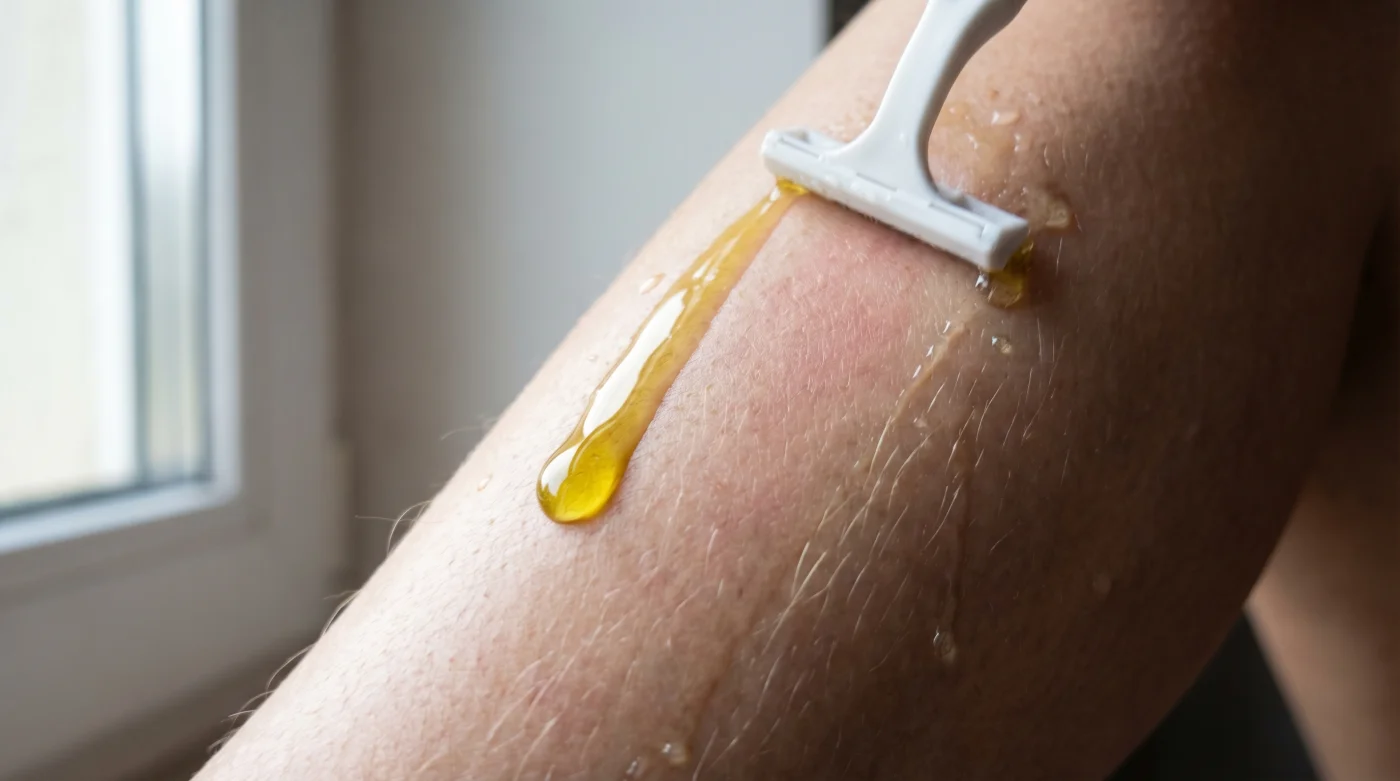
Think of commercial shaving foams like trying to paint over a dry sponge; the material simply absorbs the air, disappearing and leaving the delicate surface underneath entirely unprotected. When you apply cold-pressed olive oil to damp skin, the physics shift. The oil binds with the residual water droplets, creating a dense, slippery barrier that acts like a protective glaze over a fragile ceramic plate.
Instead of blinding your view with opaque fluff, the oil remains beautifully translucent. You can actually see the terrain of your own skin, meaning you rarely miss a spot or carelessly drag the heavy metal over an unseen contour. The blade does not scrape; it skates.
Clara, a 46-year-old holistic esthetician operating out of a quiet, sunlit studio in a Montreal walk-up, noticed this years ago. Watching her clients battle the brutal, drying effects of January winds, she realized that foaming agents were causing micro-tears on already compromised barriers. She quietly advised her regulars to abandon the pharmacy aisles and buy the most basic, inexpensive olive oil from the local grocer. ‘You do not need a fancy artisanal press from Italy,’ she often tells them while wrapping hot towels around their calves. ‘The skin simply needs the heavy lipids to catch the blade.’
It sounds almost too rustic to be genuinely effective, but this humble kitchen staple contains dense fatty acids. These compounds effortlessly mimic your natural sebum, allowing the razor to shear the hair at the absolute base without taking the crucial top layer of your epidermis with it.
Tailoring the Pour
Not every morning allows for a slow, methodical pampering session. The true beauty of this pantry secret lies in its raw, forgiving adaptability. You can modulate exactly how you use the oil depending on what your morning demands.
- Roll an ice roller to fix a puffy morning face
- Use a silk pillowcase to stop deep morning wrinkles
- Put Vaseline on your wrists to make perfume last
- Pure coconut oil fixes dry hair ends fast
- Fátima Bosch discovery drops the price of hair loss treatments
- Fátima Bosch reveals the gene therapy changing skin care
- Why estheticians are abandoning $300 microcurrent treatments for a freezer staple.
- The powder blush mistake instantly aging women over 40.
- The toxic assumption about SPF 50 that leaves Canadians vulnerable to sun damage.
- Women over 50 are ruining their skin barrier with daily retinol use.
For the Winter-Whipped: When the central heating is blasting in your home and your legs look like cracked porcelain, apply the oil before you even turn on the tap. Let the steam from water running at a gentle 38 Celsius open your pores while the oil pre-softens the hair. This deeply locks in the residual heat, protecting your barrier before the blade even touches down.
For the Sensitized: If you are prone to the dreaded strawberry legs or persistent razor bumps, the oil acts as a physical buffer. The heavy oleic acid prevents the blade from skipping, which is the primary cause of those frustrating red dots. You will want to apply a generous layer right after washing with soap, letting it sit for a full minute to let the skin drink it in before touching the razor.
For the Morning Rush: Sometimes you only have five minutes before bolting for the train. Keep a small, plastic pump bottle of the oil right on the shower shelf. Two quick pumps spread instantly over wet skin, cutting your routine time significantly because it rinses off the blade cleanly under the stream, leaving zero soapy residue behind.
The Mindful Sweep
The mechanics of the shave change entirely when you introduce a heavy lipid. You no longer need to press down. The weight of the tool itself is more than enough to sever the hair cleanly.
This shifts the entire focus of the action from force to finesse. You are no longer scraping away at yourself; you are simply guiding tension away from the surface of your body.
- The Water Temperature: Keep it comfortably warm, not scalding. Scalding water causes the skin to swell, hiding the base of the hair follicle and causing uneven cuts.
- The Dose: A tablespoon is all you need for both legs. Rub it rapidly between your palms until it feels slightly warm, behaving like melted butter.
- The Application: Massage it upward from ankle to thigh. The skin should feel slick to the touch, but not heavily dripping.
- The Sweep: Use short, deliberate strokes. Rinse the razor under the tap after every second pass. The oil will clump the cut hairs together, making them incredibly easy to wash down the drain without clogging.
- The Aftercare: Pat dry with a soft cotton towel. Do not rub aggressively. Let the remaining trace amounts of oil sink in as a built-in, lasting moisturizer.
There is a comforting rhythm to this method that subtly forces you to slow down just a fraction. It turns an automated, mindless habit into a moment of quiet focus, anchoring you firmly in your body before the day begins to demand your attention.
Reclaiming the Ritual
We are constantly sold highly complex, chemically laden solutions for the most natural aspects of our grooming. The beauty industry insists we need five different synthetic compounds just to remove fine hair from our shins. Yet, the most effective tool has been sitting quietly in the kitchen cupboard the whole time, waiting patiently to be repurposed.
By reaching for that humble green bottle, you strip away the artificial scents and the drying alcohols. You are left with pure, functional simplicity that deeply respects the delicate integrity of your skin.
Your bathroom shelves become a little less cluttered. Your rushed mornings become slightly less frantic. And when you finally pull on those thick tights to step out and face the chill, your legs feel supple, quiet, and completely at ease.
‘True skincare doesn’t fight the body’s natural environment; it simply offers a quiet layer of protection so the skin can do its own healing.’
| Key Point | Detail | Added Value for the Reader |
|---|---|---|
| Visibility | Translucent lipid glaze | Prevents accidental nicks around sharp areas like the knees and ankles. |
| Hydration | Rich in natural squalene | Eliminates the need for applying heavy body lotion immediately after showering. |
| Economy | Standard grocery store quality | Costs pennies per application compared to premium pharmacy shaving gels. |
Frequently Asked Questions
Will cheap olive oil clog my razor blades?
Not if you manage the temperature. Rinsing the blade under a strong stream of warm water after every two passes flushes the oil and hair out completely.Does it make the shower floor dangerously slippery?
It can if applied haphazardly. Keep the application strictly to your legs and wipe the shower floor with a dash of regular soap before stepping out to break down any residual oil.Do I need extra virgin or just regular olive oil?
Regular, cheap olive oil is actually better for shaving. It has a slightly lighter viscosity than the thick, unfiltered extra virgin types, making it easier to spread and rinse.Will I smell like a salad dressing all day?
No. The small amount of oil used absorbs rapidly, and the faint earthy scent dissipates within minutes of towelling off.Can I use this method if I have highly sensitive skin?
Absolutely. Because olive oil lacks synthetic fragrances and preservatives, it is widely tolerated by sensitive skin and actively helps reduce the friction that causes irritation.