You stand over the stove on a damp Tuesday evening, watching starchy bubbles rise to the surface of a small pot. The kitchen smells faintly of plain white jasmine and warm water. You saw this trick online—the cloudy liquid cooled and poured over the scalp, promising floor-length growth and blinding shine. It feels pleasantly rustic, like you are tapping into ancient apothecary secrets right beside your coffee maker.
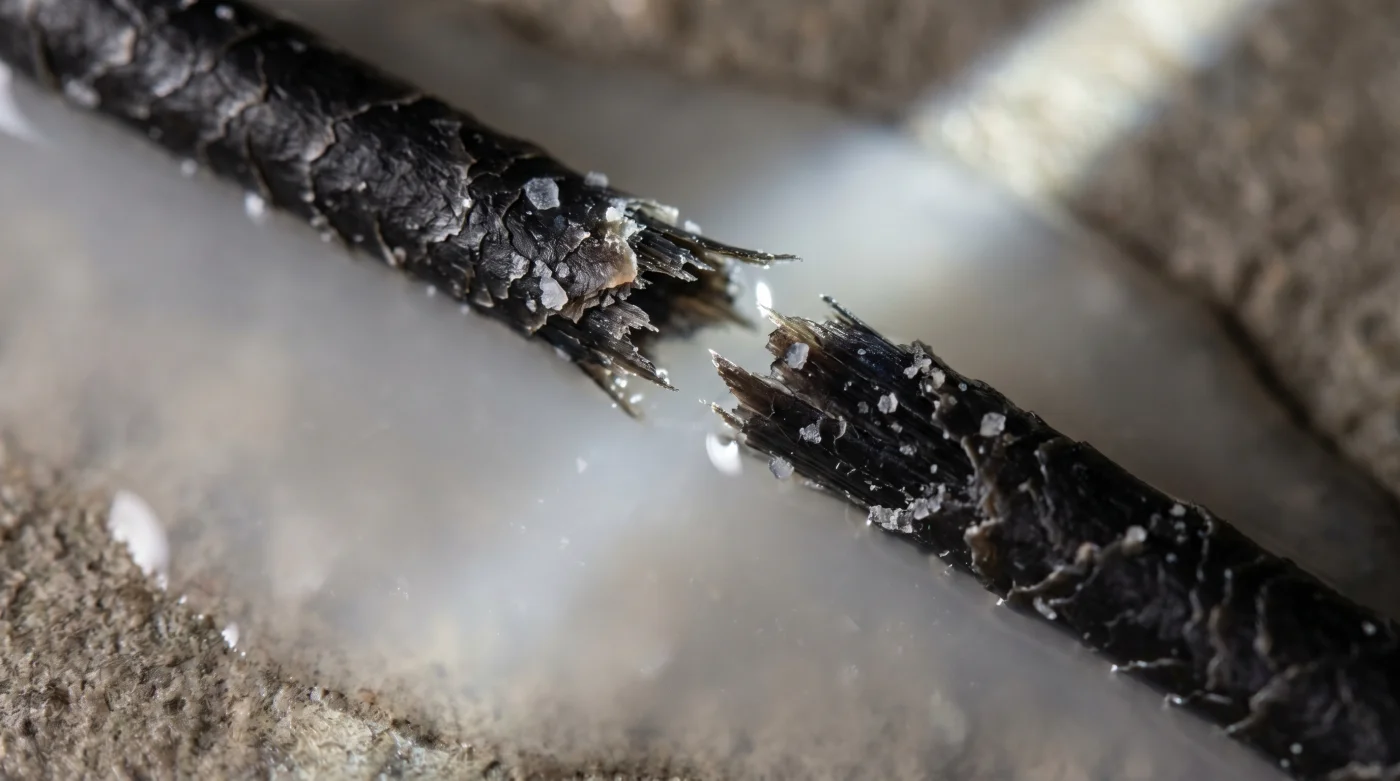
But two weeks later, as you run a wide-tooth comb through your damp lengths, you hear a sound that makes your stomach drop. A faint, dry crack. The ends of your hair aren’t stretching; they are snapping like dry twigs. The very pantry ingredient meant to save your strands is quietly suffocating them.
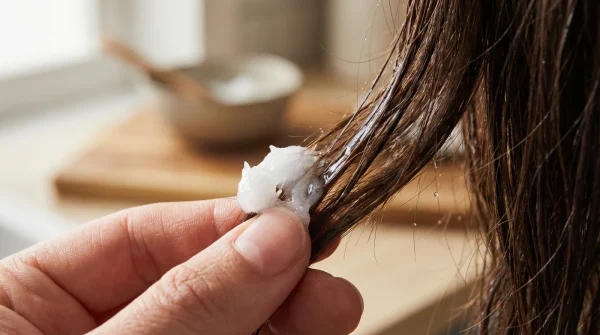
This is the quiet reality of the unfermented kitchen beauty trend. We pour cloudy, starch-heavy water over our heads, assuming it acts like a gentle moisture bath. Instead, that raw, unfermented liquid deposits heavy, rigid proteins directly onto the cuticle. It forms a hard cast. The hair loses its natural give, trading fluid movement for brittle stiffness.
The Concrete Sponge
Think of a healthy, hydrated strand of hair like a fresh, damp sponge. It bends, it squeezes, it absorbs. When you apply water or light conditioning oils, it plumps up gracefully. But when you coat that delicate sponge in raw liquid protein from unboiled, unfermented rice water, you are essentially dipping it in liquid plaster.
The raw starch clings heavily to the outer layer, filling in microscopic gaps but never penetrating deeply into the core. As it dries, the strand becomes completely rigid. Moisture from the air or your daily conditioners can no longer get in, and the natural elasticity—the hair’s ability to stretch up to thirty percent of its length and return to its shape—is entirely lost.
The pantry is an undeniably powerful place for natural beauty, but raw kitchen elements demand respect and preparation. The viral videos currently flooding your feed are skipping the most crucial step of this historical practice: fermentation. Without the souring process that actively breaks those massive protein chains down into tiny, absorbable components, you are just painting your head with heavy glue.
The Montreal Assessment
Clara Dubois, a 42-year-old texture specialist running a quiet styling studio out of a converted loft in Montreal, spends half her week repairing this exact mechanical damage. She has seen a massive spike in clients coming in with sudden, unexplainable breakage at the crown and mid-lengths, completely unaware that their weekly kitchen chemistry is the culprit.
“I feel it the moment they sit down,” she notes, running her fingers through a client’s freshly washed hair. “The hair feels artificially thick, almost like spun glass, but it breaks if you look at it wrong. The internet told them to use raw, cloudy water every single wash day, and they’ve given themselves acute protein overload. The hair doesn’t need more structure; it’s crying out for a drink.”
How the Breakage Manifests
Protein overload is a chameleon. It doesn’t look exactly the same on everyone. Your specific natural texture dictates exactly how this pantry misstep will show its face in the mirror.
- Vitamin C serum works backward if applied after this product
- Oliver Bonk hockey hair revival sparks a massive salon styling trend.
- Snail mucin allergies are silently causing your sudden adult cystic breakout.
- Dianna Russini camera makeup routine uses a drugstore primer for sweatproof foundation.
- Peptide lip treatments cause permanent volume loss when used daily.
- Health Canada Sephora investigation forces immediate removal of viral acne patches.
- Rosemary oil hair growth treatments actually trigger severe scalp inflammation.
- Korean sunscreen formulas contain a banned UV filter outperforming North American brands.
- CBSA counterfeit cosmetics seizure exposes dangerous chemicals in popular lipsticks.
- Quantum skincare technology is making traditional anti-aging serums completely obsolete.
For the Fine and Straight
If your individual strands are naturally fine, this damage often masquerades as sudden, unexplainable volume. The raw starch coats the hair, creating a rough, gritty texture that pushes the strands apart. You might think your hair feels thicker today, but that roughness is actually the cuticle lifting and violently splintering. Eventually, those swollen, rigid strands snap right down the middle.
For the Coarse and Coily
Tighter textures naturally fight an ongoing battle for hydration, craving moisture over heavy proteins. When unfermented rice water hits a coily strand, it instantly locks out whatever humidity the hair has managed to hold onto. The tightly wound structure becomes completely inflexible.
The curls lose their natural spring, hanging stiffly and feeling like dry straw to the bare touch. Because the coil cannot stretch without breaking, the ends begin to snap off faster than the root can physically grow, creating the illusion of loss while you desperately try to promote length.
Mindful Application
Fixing this rigid damage doesn’t require throwing out your pantry ingredients altogether. It simply means shifting your approach from a hasty kitchen mix to a deliberate, thoughtful preparation. If you want the historic benefits of this wash without the snapping, you have to break the proteins down first.
You need to create an environment where the heavy starches begin to naturally ferment. This lowers the pH of the liquid to match your scalp and breaks massive, damaging proteins into manageable amino acids that absorb easily without forming a hard cast on the exterior.
To safely harvest the benefits of this historical practice, follow a strict, minimalist toolkit:
- The Rinse: Wash half a cup of organic white rice thoroughly to remove surface dirt, then place it in a glass mason jar with two cups of distilled water.
- The Wait: Leave the sealed jar at room temperature (around 20 to 22 Celsius) for 24 to 48 hours. The liquid should begin to smell slightly sour, sharply bright like a mild kombucha.
- The Boil: Once sufficiently fermented, boil the liquid in a small pot for exactly five minutes to stop the fermentation process, then let it cool completely.
- The Dilution: Never use this sour concentrate straight on your scalp. Mix three tablespoons of your fermented water with a full cup of warm shower water before gently pouring it over your head.
- The Limit: Use this active rinse no more than once a month, and always follow it immediately with a rich, protein-free moisturizing mask to maintain your moisture balance.
The Bigger Picture
There is a deep, instinctual comfort in making things with your own hands. Whisking, steeping, and pouring from glass jars feels infinitely more grounded and authentic than buying another mass-produced plastic bottle from the local pharmacy shelf.
But real care requires us to look past the rustic aesthetic of a wooden spoon and a cloudy jar. It demands that we actually understand how our sensitive physical biology responds to what we feed it. Beauty isn’t about rigid control, and it certainly isn’t about forcing rapid growth through harsh, daily treatments.
When you take the specific time to ferment, to dilute, and to balance your routine, you are listening to what your body actually needs. You are restoring its natural flexibility, allowing it to move, stretch, and breathe with the environment. That simple shift—from forcing a rigid outcome to nurturing a truly flexible foundation—is where lasting health actually begins.
True hydration is about movement, not armor. When you stiffen the hair to protect it, you strip away its ability to survive a simple breeze.
| Key Point | Detail | Added Value for the Reader |
|---|---|---|
| Raw Rice Water | Unfermented, large-molecule starch directly from the pot. | Causes rapid protein overload, stiffness, and snapping. |
| Fermented Rinse | Soured at 20 Celsius for 48 hours, boiled, then diluted. | Delivers absorbable amino acids safely without forming a cast. |
| Clarifying Wash | Using a gentle sulfate or apple cider vinegar rinse. | Removes existing rigid starch buildup to restore flexibility. |
Common Pantry Ingredient Questions
Can I save hair that has already snapped? You cannot physically reverse a broken strand, but you can immediately stop using raw starch and apply a rich, protein-free deep conditioner to soften the remaining intact lengths and prevent further breakage.
Does boiling the rice water kill the nutrients? Boiling stops the fermentation process so it doesn’t rot, but the beneficial amino acids left behind by the souring process remain perfectly intact and ready to absorb.
How do I know if my hair has protein overload? Take a single wet strand of hair and gently pull it from both ends. If it stretches slightly and bounces back, it is healthy. If it feels hard and snaps instantly with no stretch, it has too much protein.
Can I leave the fermented rinse in my hair overnight? Absolutely not. The lowered pH and active amino acids are meant to be a temporary rinse. Leaving it on overnight will severely dry out the scalp and cause irritation.
Are there other kitchen ingredients that cause this? Yes. Raw egg masks and unadulterated mayonnaise treatments deposit heavy, large-molecule proteins onto the hair shaft in a very similar, rigid manner, leading to the exact same loss of elasticity.