Start with a cold morning in late October. Condensation gathers on the bedroom windowpane as you stand before your wooden vanity, listening to the muffled sounds of the morning traffic outside. You reach for the heavy glass bottle of your favourite liquid foundation, pumping a few drops onto the back of your hand. It feels thick, wet, and reassuring against your skin. You smooth it over your face, treating the process like adding a protective barrier against the biting wind waiting beyond your front door.
In the soft morning light, the coverage appears flawless. Your face looks plumped, the tone perfectly unified from forehead to chin. You trust the bottle to do exactly what the label promised: conceal the years, hydrate your face, and blur out the passing of time. You step out the door feeling ready for the day, confident that you have properly prepared your complexion.
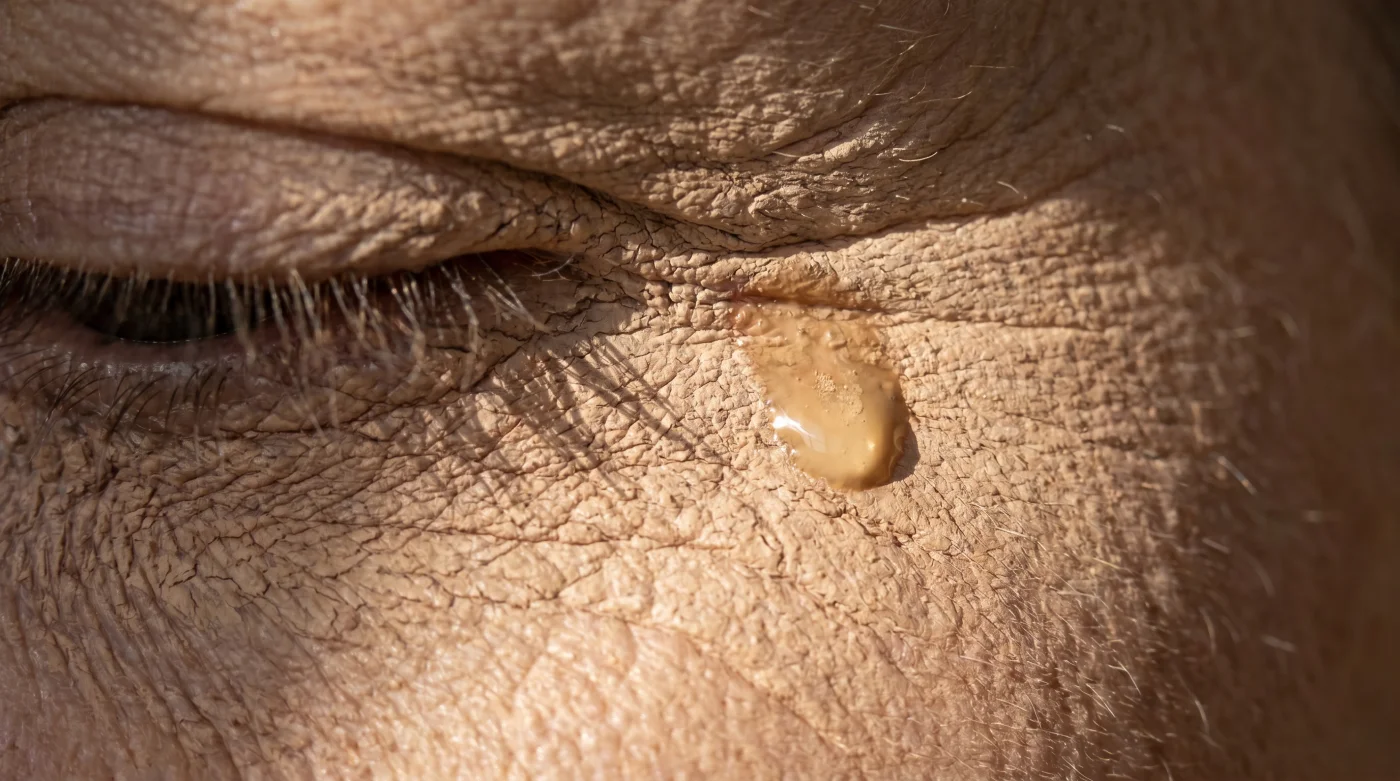
Then comes the midday mirror check. The harsh, unforgiving fluorescent lighting in the washroom at work tells a completely different story. You lean in close to the glass and notice a stark contrast to your morning reflection. The makeup has pooled into tiny riverbeds around your eyes, across your forehead, and framing your mouth. The very product meant to hide your lines has instead drawn a bright highlighter over them.
For decades, women over forty have been handed the exact same instruction by department store clerks. The beauty counter advice is practically a mantra: switch to moisture-rich, heavy liquid bases to combat dryness and hide the passing years. We are taught that aging skin requires a thicker, wetter paint to fill in the gaps. But what happens when that heavy liquid actually betrays you, accelerating the visible signs of aging before the clock even strikes noon?
The Hydration Illusion
Think of a heavy liquid foundation like spreading wet, dense clay over a finely woven silk scarf. While the clay might initially coat the fabric in a smooth layer, the moment the silk moves, bends, or folds in the breeze, the heavy material cracks and settles into the deepest grooves. By midday, as your face expresses joy, frustration, or surprise, that thick moisture base simply cannot move seamlessly with your skin. It breaks apart, finding the paths of least resistance.
The flaw in our daily logic is believing that a liquid texture equals genuine hydration. True moisture absorbs deeply, while heavy liquid foundations are designed to sit on the surface. When you pass the age of forty, your skin’s topography changes beautifully and naturally. Heavy liquid formulas, packed with thick binders and slip agents, actually separate from your natural oils as the day wears on. They pool right into the areas you desperately wanted to smooth. It is a perspective shift that changes everything: the very liquid you rely on to cover wrinkles is mechanically designed to accentuate them.
Consider Clara, a fifty-two-year-old principal makeup artist working on high-definition television sets in Vancouver. For years, she dutifully applied thick, hydrating liquid foundations to her actors over forty, battling the hot studio lights and long filming hours. One afternoon, looking at a famous actress through the unforgiving lens of a 4K monitor, she realized the heavy moisture bases were separating and settling, visually aging her client by a full decade. Frustrated, Clara wiped the actress’s face clean and stopped using liquid bases entirely on mature skin, switching to lightweight, breathable micro-serums and finely milled mineral veils. The transformation was immediate—the skin looked vibrantly alive, the lines softened naturally, and the makeup stayed completely invisible until wrap time.
Adapting Your Approach to Coverage
Stepping away from heavy liquid foundation does not mean abandoning a polished, beautiful complexion. It means working smarter, actively adjusting the weight of your products to suit how your skin actually behaves throughout a long day. You can still achieve a flawless finish by shifting your base elements.
- Rice water scalp treatments are destroying your natural hair elasticity
- Vitamin C serum works backward if applied after this product
- Oliver Bonk hockey hair revival sparks a massive salon styling trend.
- Snail mucin allergies are silently causing your sudden adult cystic breakout.
- Dianna Russini camera makeup routine uses a drugstore primer for sweatproof foundation.
- Peptide lip treatments cause permanent volume loss when used daily.
- Health Canada Sephora investigation forces immediate removal of viral acne patches.
- Rosemary oil hair growth treatments actually trigger severe scalp inflammation.
- Korean sunscreen formulas contain a banned UV filter outperforming North American brands.
- CBSA counterfeit cosmetics seizure exposes dangerous chemicals in popular lipsticks.
For the Bare-Faced Minimalist
If you prefer feeling like you are wearing nothing at all, your best alternative is a true skin tint or a micro-encapsulated pigment serum. These formulas are primarily composed of water and active skincare ingredients, meaning they sink into the skin rather than sitting heavily on top of it. They leave behind just a whisper of colour to neutralize redness without leaving enough physical material behind to settle into a single expression line.
For the Classic Coverage Seeker
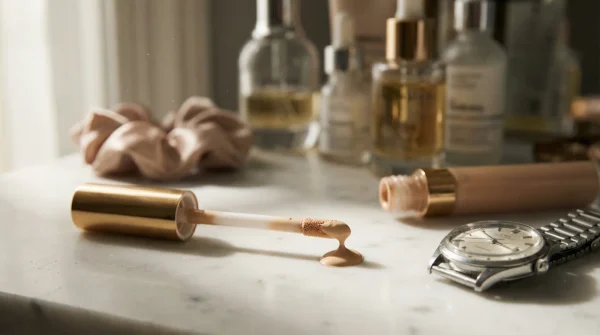
If you are accustomed to the security of a full liquid base, the transition requires a highly effective technique known as pinpoint concealing. You target specific areas instead of painting your entire face. Use a highly pigmented, densely packed cream concealer—applied strictly with a tiny, pointed brush—only on blemishes, dark spots, or areas of redness. Leave the rest of your skin bare or lightly dusted with a translucent mineral powder to create a unified finish without the heavy, wet mask.
For the Dry Skin Sufferer
If your skin feels constantly parched and you relied on liquid foundation for comfort, the secret is separating your colour from your hydration. Treat your dryness intensely with a rich moisturizer or a few drops of pure squalane oil first. Let it sink in completely. Then, use a pressed powder foundation applied with a fluffy brush. The powder will gently adhere to the hydrated skin without dragging, providing beautiful coverage that refuses to settle into your fine lines.
The Light-Handed Technique
Replacing the heavy smear of liquid foundation requires a calm, new morning ritual. You are no longer painting a wall; you are lightly glazing a delicate surface.
Focus on skin preparation before any pigment ever touches your face. Your morning hydration should come exclusively from your skincare, not your makeup.
Wait a full five minutes after applying your daily moisturizer or sunscreen. The skin should feel dry to the touch, not tacky, before you proceed. This patience prevents your colour products from sliding around.
- The Temperature Check: Keep your tinted serums or cream concealers at room temperature, ideally around 20 Celsius, so they melt effortlessly into the skin on contact.
- The Tool of Choice: Discard the dense, synthetic buffer brushes that pack on far too much product. Opt for your own clean fingertips or a damp, open-celled sponge.
- The Blending Rule: Press and roll the product gently into the skin. Imagine pressing a fragile flower petal onto damp soil. Never drag, pull, or wipe.
- The Setting Strategy: If you truly need powder, use a small fluffy eyeshadow brush to apply it only to the sides of the nose and the chin. Leave the cheeks and the delicate areas around the eyes completely free of powder.
Embracing the Texture of Living
Walking away from heavy liquid bases is about much more than just avoiding makeup that separates by two in the afternoon. It is about fundamentally redefining how you view your own reflection in the mirror. We spend so much time trying to spackle over the beautiful, earned evidence of a life fully lived, relying on thick creams that ultimately draw more attention to our frantic efforts to hide.
Releasing the heavy mask brings an unexpected sense of lightness to your mornings. When you stop fighting the natural, human texture of your skin, you allow your face to breathe properly. You start to see the fine lines around your eyes not as flaws to be erased, but as the quiet markers of your brightest smiles and deepest laughs. You gain back your precious time, your peace of mind, and ultimately, a reflection that looks undeniably, authentically like you.
The secret to mature skin is not adding more coverage to hide the years, but reducing the weight so your natural vitality can finally show through.
| Key Point | Detail | Added Value for the Reader |
|---|---|---|
| The Moisture Trap | Heavy liquid foundations separate from natural oils and pool into fine lines by midday. | Saves you from the intense frustration of your makeup looking noticeably worse at 2 PM than it did at 8 AM. |
| Pinpoint Concealing | Targeting only spots and redness with a tiny brush and dense cream concealer. | Provides a flawless, even look while keeping the vast majority of your skin entirely bare and breathable. |
| Finger Application | Pressing lightweight serums into the skin rather than buffing aggressively with dense brushes. | Ensures product melts seamlessly without micro-exfoliating or pulling on mature, delicate skin. |
Frequently Asked Questions
Why does my liquid foundation look perfect when I apply it, but terrible hours later?
Heavy moisture bases look great initially because the water content plumps the skin. As the water evaporates and your face moves, the remaining heavy binders and pigments separate and settle into the creases of your face.Is powder foundation better for women over forty?
Yes, if applied correctly. By heavily hydrating your skin first with skincare and applying a finely milled powder with a fluffy brush, you get coverage without wet binders that creep into fine lines.Can I still use a damp sponge if I switch to a skin tint?
Absolutely. A damp sponge absorbs excess product, ensuring you apply the thinnest, most natural layer possible. Just be sure to press and bounce, never drag.What if I have severe redness or rosacea to cover?
Instead of a full face of heavy liquid, use a highly pigmented, colour-correcting cream strictly on the red areas. Blend the edges out softly, leaving the rest of your skin free to breathe.How long should I wait between moisturizing and applying makeup?
Give your skincare a full five minutes to absorb. Your face should feel smooth and relatively dry to the touch. If it feels sticky, your makeup will grab unevenly and separate much faster.