The early morning light hitting the bathroom mirror carries that pale, frosty edge familiar to a late November morning in Calgary. You twist the tap, waiting for the pipes to warm up, watching the running water cascade over your favourite teardrop-shaped foam. You hold it under the stream, waiting for it to swell into a plump, soft cushion. It feels like a non-negotiable step, the foundation of your entire cosmetic routine.
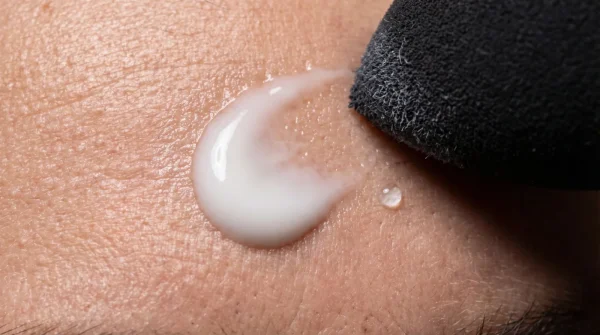
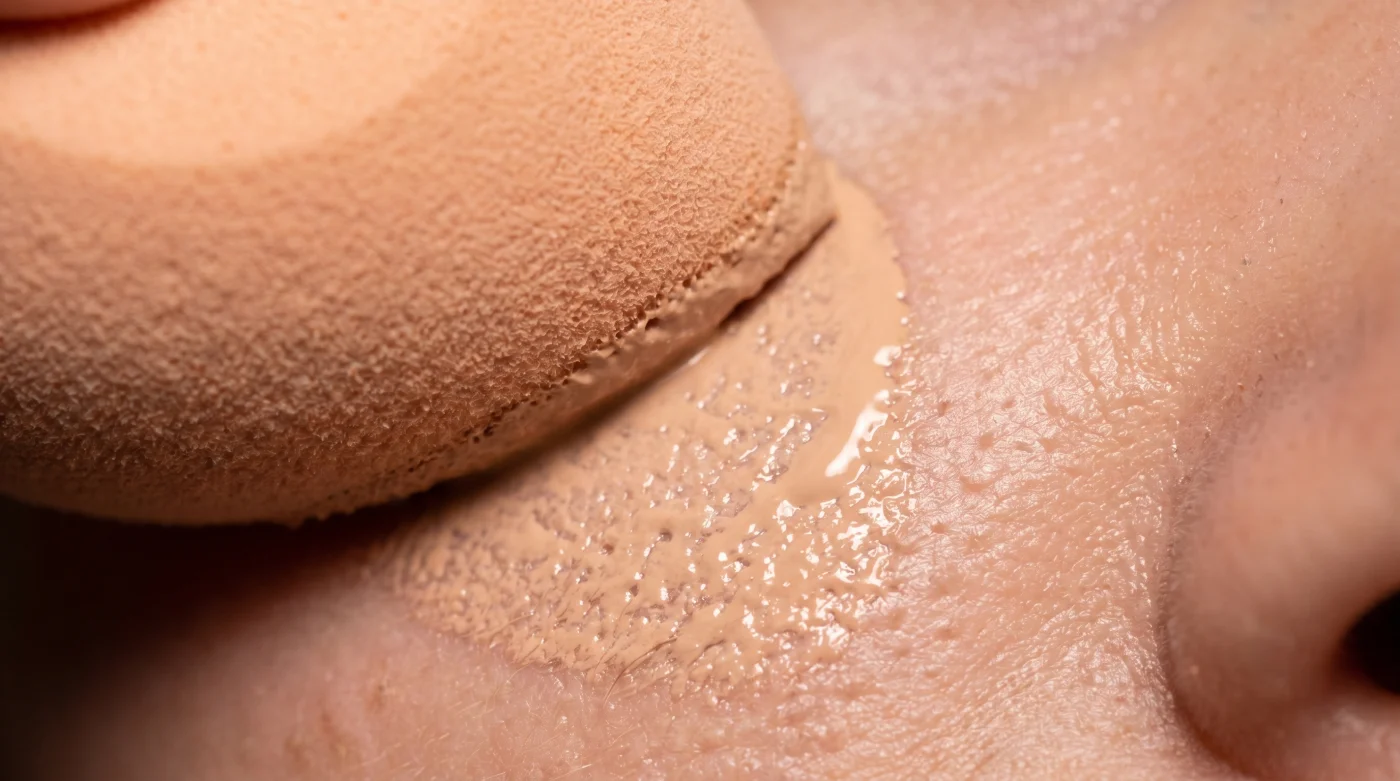
You give it a firm squeeze, maybe blot it briefly on a towel if you are feeling thorough, and start bouncing liquid colour against your cheek. The coverage instantly disappears, shearing out into a faint, patchy wash that leaves your redness, hyperpigmentation, and blemishes entirely visible. The vibrant pigment you saw on the back of your hand has vanished into thin air.
You probably blame the foundation, assuming the formula is too thin, expired, or perhaps that your skin is simply too textured today. You add another pump, then another, desperately trying to build up the base. Instead, you are just watching expensive pigment vanish directly into the microscopic pores of the foam, leaving your face looking uneven and muddy.
The frustration is palpable, yet the culprit isn’t your skin, your primer, or your expensive bottle of foundation. The culprit is a misunderstanding of basic physics. You were told to soak your makeup tools to prevent them from absorbing product, but that well-intentioned advice is actually stealing your coverage. You have been sabotaging your own routine by following the instructions a little too perfectly.
The ‘Thirsty Sponge’ Paradox
Think of a kitchen counter spill. If you drop a bone-dry rag over a puddle of milk, it struggles to absorb the liquid immediately. But if that rag is slightly damp, it acts like a magnet, pulling moisture up into its fibres with alarming speed.
Your makeup applicator operates on the exact same principle. When you use a foam tool that is completely soaking wet—or even just slightly too saturated—the water inside creates a surface tension that refuses to let oil-based or silicone-based pigments settle.
When we look at cosmetic chemistry, most modern foundations rely on a delicate emulsion of water, silicones, and oils. When a soaking applicator hits that carefully balanced liquid, the excess water from the foam floods the emulsion. The foundation breaks apart on contact, completely losing its ability to grip the epidermis.
Instead of pressing the colour evenly across your face, a wet sponge acts like a gentle squeegee. It literally lifts the pigment right back off your skin. Smearing a delicate foundation with a soaking tool is like trying to breathe through a wet pillow—it entirely suffocates the texture of the product, leaving behind a compromised residue. A semi-dry sponge, however, holds just enough moisture to remain soft, allowing it to press pigment down rather than drinking it away.
Consider Clara, a 34-year-old head of makeup on a brisk Toronto television set. Working under unforgiving high-definition lights, she cannot afford patchy bases on her actors. Clara never runs her tools under a tap. Instead, she treats the foam like a fine pastry dough—needing just enough hydration to bind, but never enough to become sticky. She keeps a small spray bottle of distilled water and a clean cotton cloth on her station. She mists the sponge lightly, then rolls it firmly inside the dry cloth.
- Magnesium supplements clear hormonal acne faster than topical spot treatments
- Liquid foundation accelerates visible aging for women over forty years
- Rice water scalp treatments are destroying your natural hair elasticity
- Vitamin C serum works backward if applied after this product
- Oliver Bonk hockey hair revival sparks a massive salon styling trend.
- Snail mucin allergies are silently causing your sudden adult cystic breakout.
- Dianna Russini camera makeup routine uses a drugstore primer for sweatproof foundation.
- Peptide lip treatments cause permanent volume loss when used daily.
- Health Canada Sephora investigation forces immediate removal of viral acne patches.
- Rosemary oil hair growth treatments actually trigger severe scalp inflammation.
Her tools are cold to the touch and slightly expanded, but completely dry on the very outer layer. This controlled semi-dry state is the quiet secret to achieving flawless blending without wasting a drop of product. She maintains absolute control over the coverage, pressing the foundation seamlessly into the skin.
Tailoring the Moisture to Your Routine
Understanding the moisture balance means you can adapt the foam to whatever you are trying to achieve. Not all formulas crave the same level of dampness, and treating every product with the exact same technique is a recipe for inconsistency.
For the Liquid Tint Devotee: If you prefer skin tints and watery serums, your tool needs the least amount of moisture. Too much water will dilute an already sheer formula into nothingness. Squeeze your foam in a thick towel until you cannot feel a single drop of coolness against your wrist.
For the Cream Foundation Traditionalist: Heavy creams and stick foundations need a bit of slip to spread beautifully. A slightly cooler, marginally more damp applicator helps melt the heavy waxes in the product. The moisture provides a soft glide, preventing the cream from dragging across dry patches.
For the Spot Concealer: When hiding a blemish or dark circle, you want maximum opacity. Using a wet applicator here is the fastest way to expose what you meant to hide. Keep a fully dry mini-sponge strictly for these targeted areas. A dry press forces the heavy pigment directly into place without disturbing the edges.
For the Setting Powder Enthusiast: Pressing loose powder under the eyes is a classic technique, but a wet applicator will turn that fine dust into a heavy, cakey paste. For powder application, the tool must be nearly bone-dry. The slightest hint of moisture will cause the powder to oxidize, darkening the colour and settling deeply into fine lines.
The Professional Preparation Method
Shifting your morning routine from a rushed habit to a deliberate process requires a minor adjustment in timing. It is about understanding the material in your hands and treating it with more respect than a quick run under the bathroom tap.
Instead of relying on your bare fingers to wring out the water, bring a clean, dry face cloth into the equation. Your grip alone cannot expel enough moisture from the dense centre of the foam, no matter how firmly you squeeze it over the sink.
Wrap the expanded tool completely inside the cloth. Give it one firm, deliberate squeeze, holding the pressure for three full seconds. When you open the cloth, the applicator should feel soft and airy, yet entirely dry to the touch on its surface.
Here is your tactical toolkit for mastering the application:
- Water Temperature: Aim for roughly 20 degrees Celsius. Cold water tightens the material; hot water degrades the glue holding it together.
- The Wrist Test: Press the squeezed tool against the inside of your wrist. If it leaves behind a wet stamp or a chill, it is still too damp.
- Application Motion: Stop wiping or dragging. Use a firm, rhythmic pressing motion—often called stippling—to push the pigment downward.
- Product Placement: Never pump foundation directly onto the foam. Apply the product to the back of your hand or directly onto your face first.
A Quieter, Clearer Morning
Rethinking something as simple as how you wet a piece of foam might seem trivial. Yet, it represents a larger shift in how we interact with our daily rituals. We often follow instructions blindly, accepting poor results as personal failures.
When you realize that your patchy foundation was merely a symptom of excess water, a small tension releases. You stop buying endless bottles of new foundation searching for a miracle, and you start working with your tools instead of against them.
You save money. You save time. You stop battling your reflection in the mirror before you even step out the door for your five-mile morning commute in the chill. A semi-dry sponge does not just offer better coverage; it offers the quiet satisfaction of knowing precisely how to make your routine work for you.
It transforms a frustrating morning chore into a moment of genuine competence. You are no longer merely painting your face; you are mastering your daily application, breathing fresh life into products you already own.
“The magic of a flawless base isn’t in the price of the foundation, but in the exact tension of the tool pressing it into the skin.”
| Key Point | Detail | Added Value for the Reader |
|---|---|---|
| The Towel Squeeze | Wrap the damp tool in a dry cloth and squeeze firmly for three seconds. | Prevents the squeegee effect, ensuring foundation stays on the face, not in the foam. |
| The Wrist Test | Press the prepared applicator against your inner wrist to check for residual wetness. | Provides a foolproof physical gauge to guarantee maximum coverage and zero patchiness. |
| Dry Concealing | Reserve a completely dry, un-expanded mini applicator for blemishes. | Keeps high-coverage formulas completely opaque exactly where you need them most. |
Why does my foundation look patchy right after applying?
Your applicator is likely too wet, creating a squeegee effect that lifts the product right off the skin as you bounce it.Should I ever use my blending tool completely dry?
Yes, a completely dry applicator is brilliant for pressing in high-coverage spot concealer or applying setting powders to oily zones.How often should I be washing these foam applicators?
Ideally, give them a quick cleanse after every use to prevent the build-up of oils and pigments, which harden the foam over time.Does the temperature of the water matter when expanding it?
Lukewarm water is best. It softens the material perfectly without degrading the structural integrity of the foam like hot water does.Why shouldn’t I apply foundation directly onto the foam?
The porous surface will immediately suck the pigment deep into its centre before it ever touches your face, wasting expensive product.